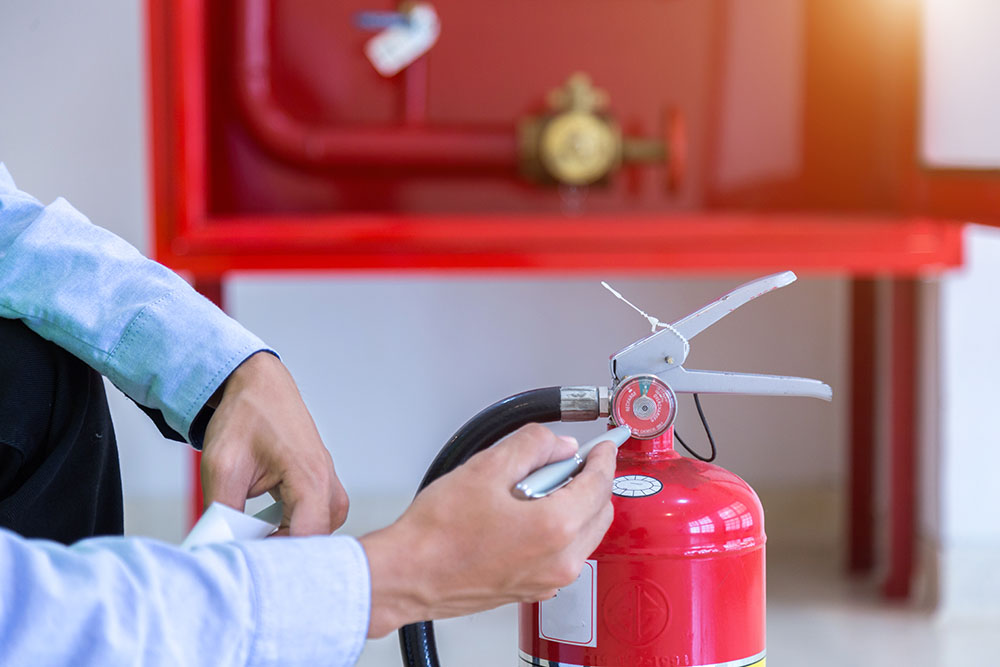
 When a fire breaks out, every second counts. Having the correct fire extinguisher in the right place can make the difference between a minor incident and a devastating fire. However, having an extinguisher isn’t enough – it must be the correct type, properly maintained, and users should know when and how to use it safely.
Are Powder Fire Extinguishers Now Banned Indoors?
This is one of the biggest questions we’re asked.
The simple answer is no – powder extinguishers are not banned and there is no legislation making it illegal to have them inside buildings.
However, British Standard BS 5306-8 now recommends that powder extinguishers should not be installed inside enclosed premises unless there is a specific risk that makes them necessary. This guidance is widely followed throughout the fire safety industry.
Why are they no longer recommended indoors?
Although dry powder extinguishers are highly effective, they can create significant problems inside buildings:
Today, powder extinguishers are generally recommended for:
Which Fire Extinguisher Do You Need?
💧 Water Extinguisher
Best for:
Ideal for offices, schools, shops and general workplaces.
Never use on:
🫧 Foam Extinguisher
Best for:
Commonly found in offices, warehouses and commercial premises.
Avoid using on:
⚫ CO₂ (Carbon Dioxide)
Best for:
CO₂ leaves no residue, making it ideal where protecting equipment is important.
Not suitable for:
🟡 Wet Chemical
Best for:
These are specifically designed for Class F fires and are essential in restaurants, takeaways and catering facilities.
🔵 Dry Powder
Best for:
Although versatile, these are generally not recommended for indoor enclosed spaces unless a fire risk assessment identifies a specific need.
Fire Extinguisher Safety Tips
Remember the PASS method:
P – Pull the safety pin.
A – Aim at the base of the fire.
S – Squeeze the handle.
S – Sweep from side to side.
Most importantly:
Fire Safety Facts
Don’t Forget Maintenance
A fire extinguisher is only effective if it works when you need it.
Responsible persons should ensure extinguishers:
Final Thoughts
Fire extinguishers are an essential part of any fire safety strategy, but choosing the correct type is just as important as having one in the first place.
While powder extinguishers remain legal, current British Standard guidance recommends avoiding their use inside enclosed premises because of the risks they pose to occupants. In most offices, shops and commercial buildings, modern water-based, foam, CO₂ or wet chemical extinguishers provide a safer and more appropriate solution.
If you’re unsure whether your premises have the correct extinguishers, a professional fire risk assessment and extinguisher survey can ensure you’re fully protected and compliant.
Contact us for further information.