Health and safety training ensures employees understand hazards, know how to work safely, and can respond effectively when something goes wrong. It’s the foundation of a safe workplace and a legal obligation under the Health and Safety at Work etc. Act 1974, which requires employers to provide “information, instruction, training and supervision” to protect staff.
Training is also proven to work. Over the past 50 years, systematic safety training has contributed to an 85% reduction in workplace fatalities in the UK.
Employers have clear legal duties, including:
Failure to meet these duties can result in unlimited fines, prohibition notices, and even imprisonment under the Corporate Manslaughter Act 2007.
Employees also play a vital role in maintaining safety. Their responsibilities include:
A trained employee is more confident, more productive, and far less likely to be involved in an incident.
The consequences of inadequate training are both human and financial:
In the UK alone, employers lose £42–£45 billion each year due to absenteeism, presenteeism, and turnover — much of which is preventable through proper training.
Effective health and safety training leads to:
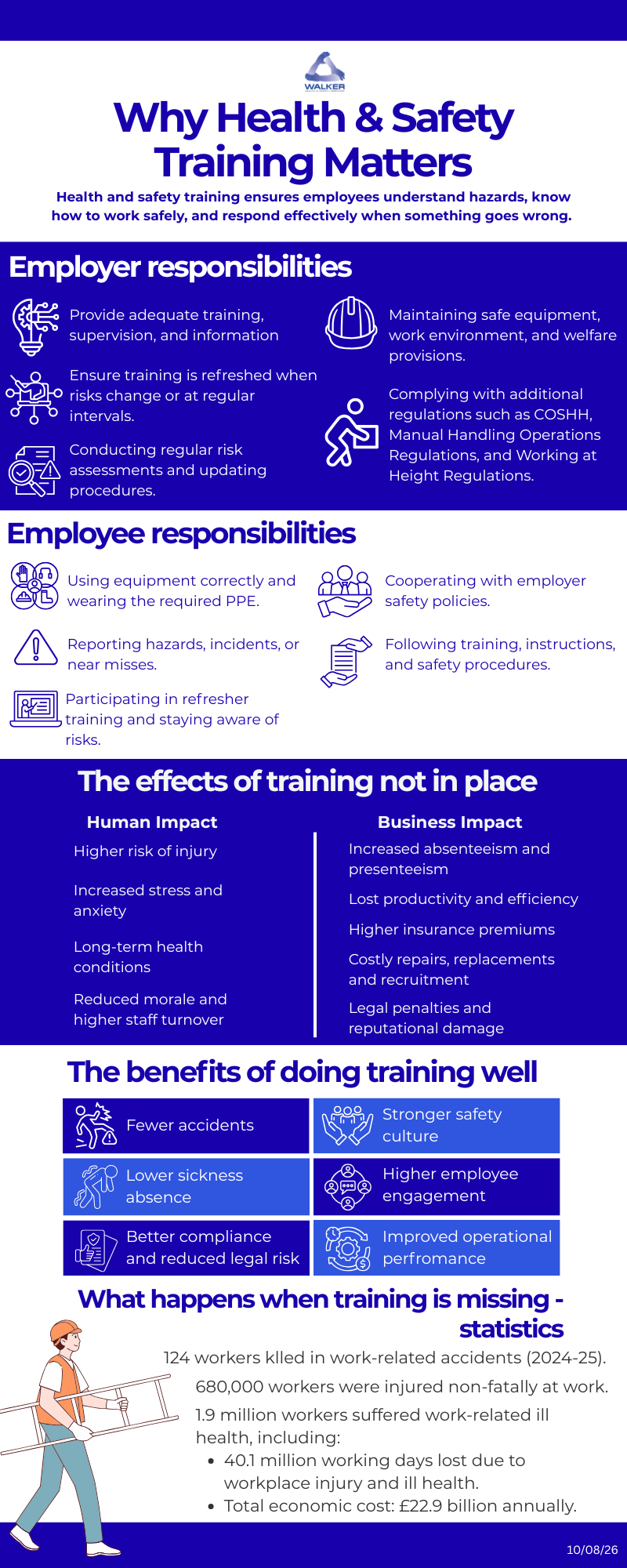
Health and safety training isn’t just a box-ticking exercise — it’s a strategic investment that protects people, strengthens businesses, and ensures legal compliance. The statistics make one thing clear: training saves lives, reduces costs, and builds better workplaces.
Contact us for further information.
Guest Blogging
If you feel that you could contribute to this blog then please feel free to send me a proposal of your guest blogging ideas and we can discuss these further info@walkersafety.co.uk . Please note any proposals must be of benefit to my readers from individuals with knowledge of their subject matter.