A Health & Safety Perspective for Modern Organisations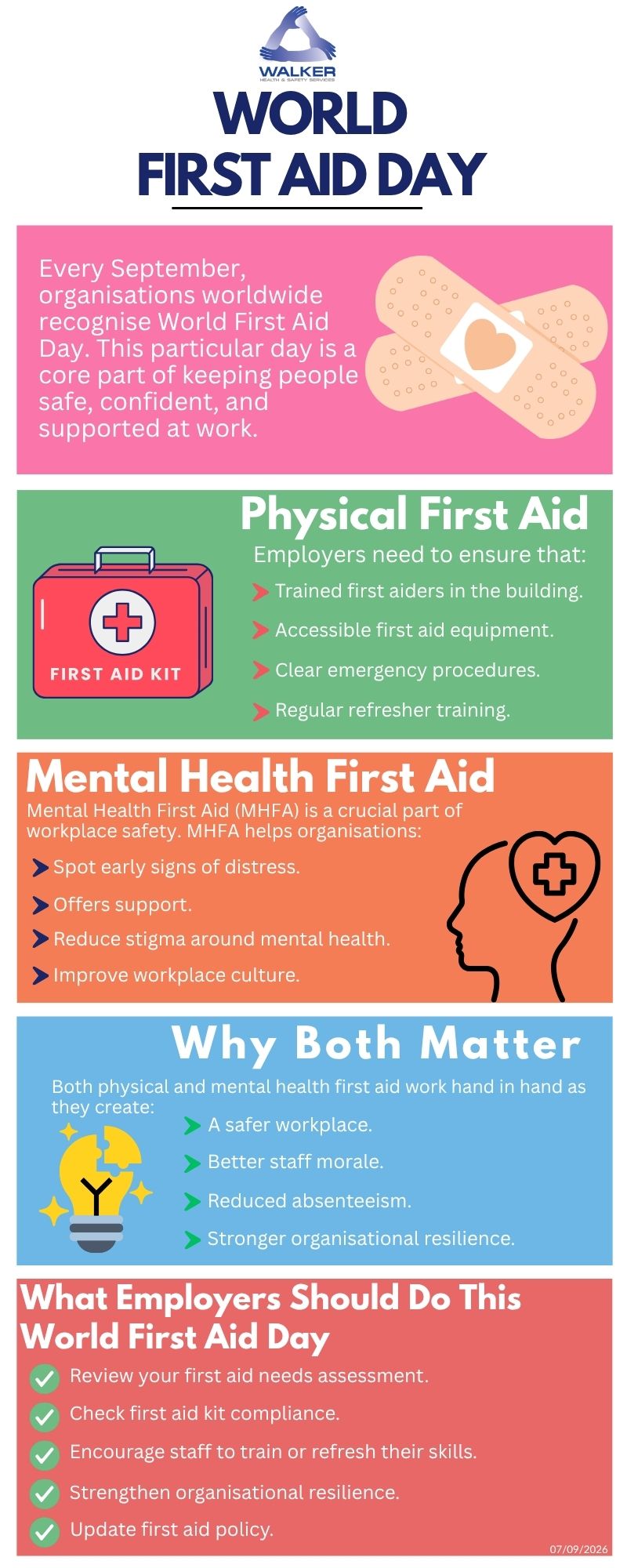
Every September, organisations across the world recognise World First Aid Day — a reminder that first aid isn’t just a compliance tick‑box, but a core part of keeping people safe, confident, and supported at work.
In today’s workplaces, first aid goes far beyond plasters and bandages. It includes early intervention, preparedness, and increasingly, mental health first aid, which plays a vital role in preventing crises and supporting staff wellbeing.
🩹 Physical First Aid: The Foundation of Workplace Safety
Physical first aid remains the backbone of emergency response. Employers must ensure:
World First Aid Day is an ideal moment to review your provision, check expiry dates, and ensure your first aiders feel confident and supported.
🧠 Mental Health First Aid: The Modern Essential
Mental Health First Aid (MHFA) is now recognised as a critical part of workplace safety. While not legally mandated, it is strongly encouraged by the HSE as part of a holistic approach to employee wellbeing.
MHFA helps organisations:
World First Aid Day is the perfect opportunity to highlight that first aid isn’t only for physical injuries — psychological safety matters just as much.
🔍 Why Both Matter: A Joined‑Up Approach to Safety
Physical and mental health first aid work best when integrated. Together, they create:
A first aider who can respond to a cut finger is valuable. A first aider who can also recognise burnout, panic, or crisis is invaluable.
🏢 What Employers Should Do This World First Aid Day
Use September as a chance to:
Even small improvements can make a big difference.
💬 Final Thought
World First Aid Day is more than a date on the calendar — it’s a reminder that safety is proactive, not reactive. Whether it’s a physical injury or a mental health concern, the ability to respond quickly, calmly, and confidently can change someone’s day… or even save a life.
Contact us for further information.
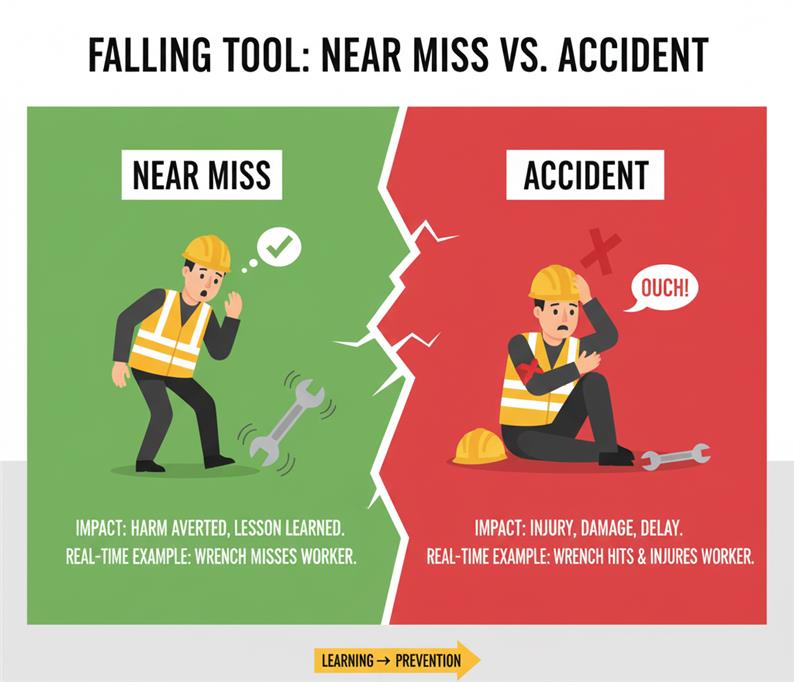 As we move through April, it’s a good moment to pause and reflect on one of the most overlooked aspects of workplace safety: near‑miss reporting. While accidents and injuries rightly receive attention, the incidents that almost happened often hold the most valuable lessons. Strengthening how we recognise and report near misses can dramatically reduce risk, prevent harm, and build a stronger safety culture across UK workplaces.
A near miss is any unplanned event that didn’t result in injury, damage, or loss — but had the potential to. Examples include:
These moments are warnings. They highlight hazards before they escalate into something more serious.
Every near miss is a chance to fix a problem before it becomes an incident. When employees report them, organisations can identify patterns, remove hazards, and improve processes.
Encouraging open reporting shows that safety is a shared responsibility. It builds trust and empowers people to speak up without fear of blame.
Preventing accidents reduces downtime, compensation claims, and operational disruption. A proactive approach is always more cost‑effective than reacting after the fact.
While near misses aren’t legally required to be reported under RIDDOR, demonstrating a robust internal reporting system helps organisations meet their wider duty of care under UK health and safety law.
Complicated forms or unclear processes discourage people from speaking up. A quick digital form, QR code, or simple reporting line can make a huge difference.
Employees must feel safe to report issues without fear of criticism. Reinforce that near‑miss reporting is about learning, not blaming.
Nothing undermines a reporting system faster than inaction. Acknowledge reports, investigate promptly, and communicate what’s been done.
Regularly update teams on improvements made as a result of near‑miss reports. This reinforces the value of reporting and encourages ongoing participation.
When managers and supervisors report near misses themselves, it sets the tone for everyone else.
Near misses are gifts — early warnings that give us the chance to prevent harm before it happens. By taking them seriously, acting on them, and encouraging open reporting, organisations can create safer, healthier workplaces for everyone.
Contact us should you require further information.
Guest Blogging
If you feel that you could contribute to this blog then please feel free to send me a proposal of your guest blogging ideas and we can discuss these further info@walkersafety.co.uk . Please note; any proposals must be of benefit to my readers from individuals with knowledge of their subject matter.
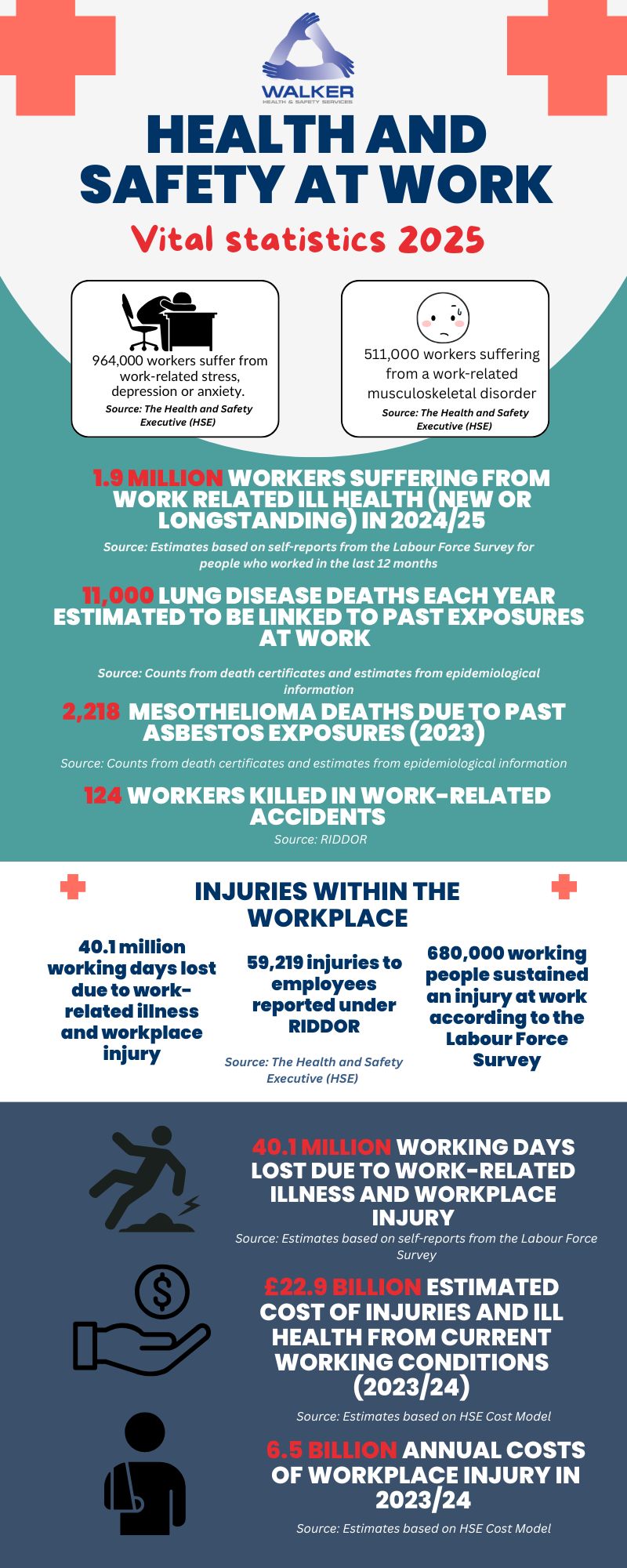
Here at Walker Health and Safety Services Limited, we have researched (from various websites) and identified a number of statistics on workplace injuries and health and safety in Great Britain. Upon reflection, it is evident that the number of injuries remains high, underscoring the importance of prioritising workplace safety. The stats show that when health and safety rules are overlooked, it reveals what can go wrong.
It is essential that workers, employers, and managers all play their part in creating a safe and secure workplace. Following health and safety rules is crucial for protecting employees from harm, ensuring legal compliance, boosting productivity, and enhancing business reputation.
This shouldn’t be seen as a burden as it offers significant benefits – reduced costs, reduced risks, lower absences from employees, and lessened threat of legal action.
Health and safety with the workplace statistics for 2025:
Source: The Health and Safety Executive (HSE)
Source: The Health and Safety Executive (HSE)
Source: Estimates based on self-reports from the Labour Force Survey for people who worked in the last 12 months
Source: Counts from death certificates and estimates from epidemiological information
Source: Counts from death certificates and estimates from epidemiological information
Source: RIDDOR
Source: The Health and Safety Executive (HSE)
Source: The Health and Safety Executive (HSE)
Source: Estimates based on HSE Cost Model
Source: Estimates based on HSE Cost Model
Contact us if you feel you require assistance with your health and safety requirements.
Do you log all accidents and near misses in the company?
Are your health and safety documents up to date and do the risk assessments reflect any recent accidents or near misses?
Do you learn from accidents and near misses?
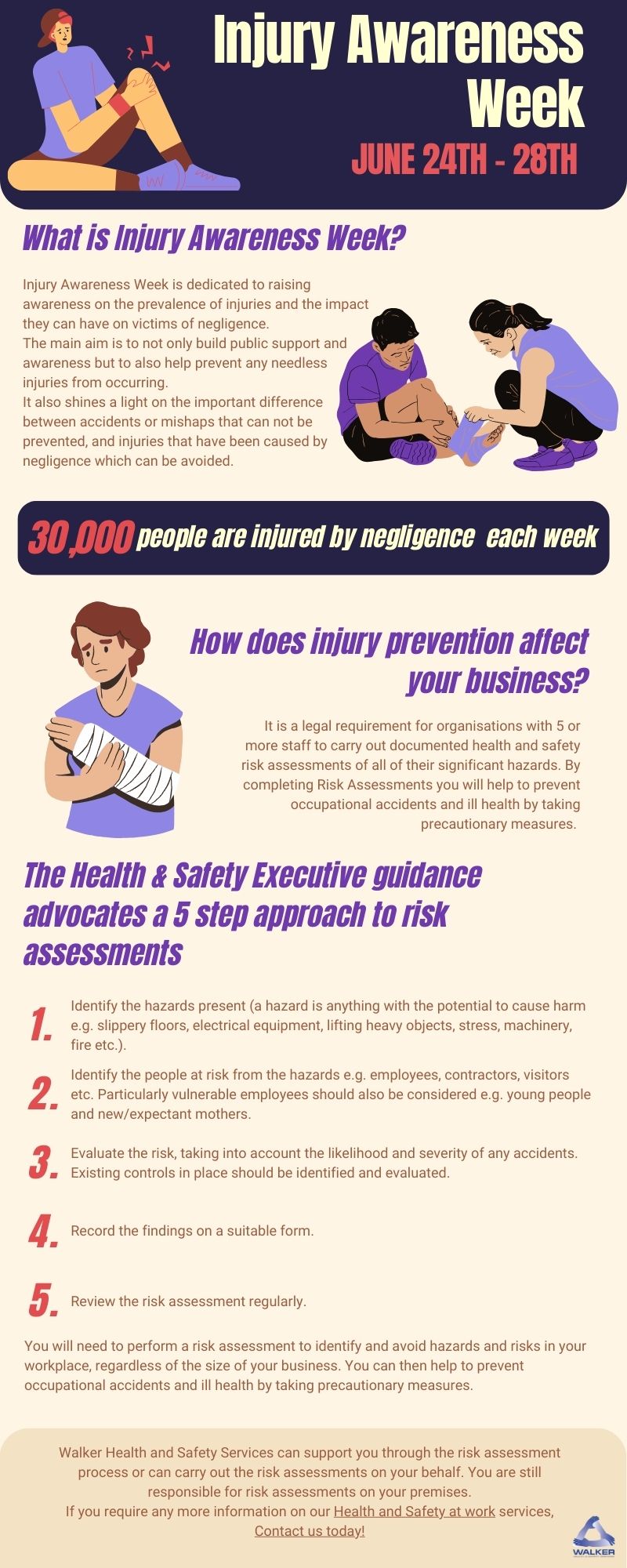
This week the focus is on the impact of avoidable workplace injuries.
Contact us if you require further information.
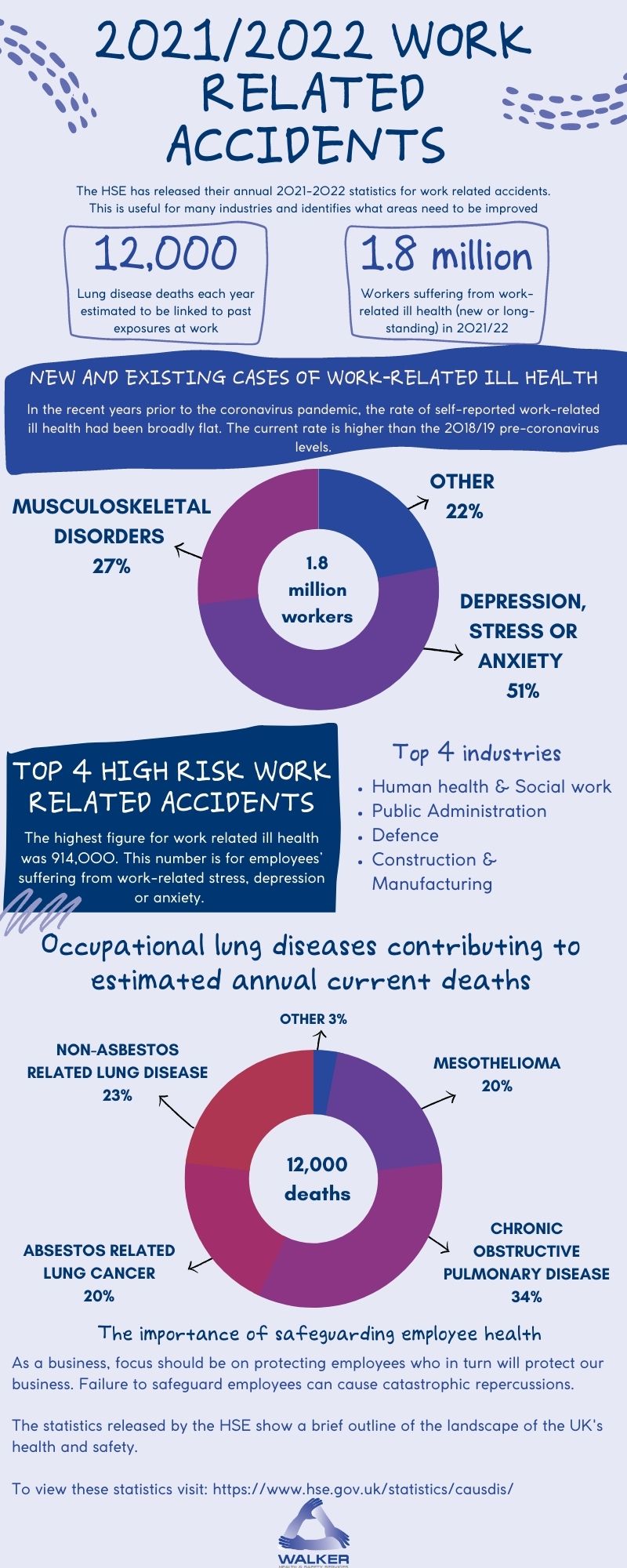
Prioritising your legal requirements for employee health is one of the best investments you will make. Not only will this ensure that accidents and injuries are kept to a minimum, but you will also avoid large fines as a result of non-compliance.
After these statistics, the HSE will be hot on the tales of any business who tries to evade their legal responsibilities. So what can you do now to reduce work related accidents and injuries?
We’re not saying that all businesses don’t take employee health and well being seriously. We know they do! Working closely with our customers, we able to help implement health and safety controls and measures that adhere to HSE legal frameworks.
Along with protecting your workforce from work related accidents and ill health, you also protect your business. The upfront cost of ensuring you achieve your legal requirements is outweighed by the cost of fines, sick days, and the cost of recruiting new employees if someone leaves due to stress or long-term ill health. So if your business needs a once over, we can definitely help.
Contact us if you have any queries.