PPE is the last line of defence in the hierarchy of control — but it only works when it is selected correctly, worn consistently, and inspected properly. Under UK law, employers have a legal duty to ensure PPE is suitable, maintained, and used correctly, while employees have a duty to wear it and cooperate with safety measures.
Yet PPE meetings often fail because they simply repeat “wear your PPE.” Effective sessions explore why workers remove PPE — discomfort, poor fit, fogging, restricted movement, or a belief that the risk is low — and how to fix those issues.
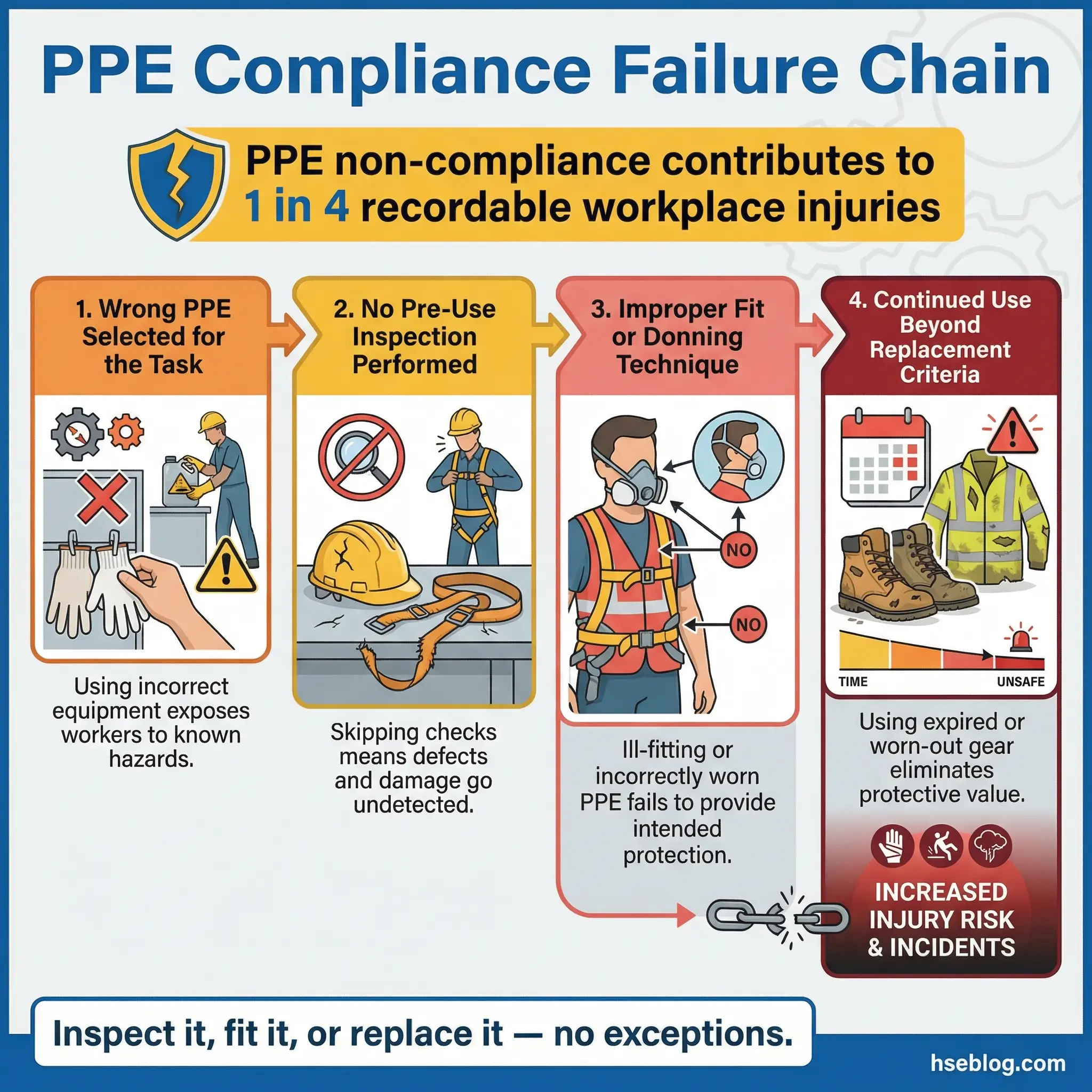
Your infographic highlights the four common failure points:
A key stat:
PPE non‑compliance contributes to 1 in 4 recordable workplace injuries.
This is why PPE selection must be task‑specific, evidence‑based, and reinforced through training.
Employers must ensure, so far as reasonably practicable, the health, safety, and welfare of employees. This includes providing suitable PPE, safe systems of work, and adequate training.
Employees must:
Requires employers to:
Key requirements:
Relevant where PPE interacts with machinery:
PPE selection must be driven by a formal hazard assessment, not habit or availability. In UK terms, this means:
Workers should understand why a specific glove, visor, respirator, or hearing protector was chosen — not just that it was issued.
Workers must inspect PPE before every shift, checking for:
Under UK law, employers must ensure PPE is maintained and replaced, but employees must report defects immediately.
Incorrect removal of contaminated PPE can transfer hazards to skin or clothing. Training should cover:
This is especially critical for chemical, biological, and dust‑related PPE.
Workers must know when PPE needs replacing, not just when it looks damaged.
Examples:
Clear replacement criteria reduce risk and improve compliance.
Hands‑on sessions work best. Let workers compare:
Informed selection beats forced compliance every time.
PPE is only effective when it’s selected correctly, worn properly, inspected regularly, and replaced promptly. Under the Health and Safety at Work etc. Act 1974, employers have a duty of care to provide suitable PPE and maintain safe systems of work, while employees must use PPE responsibly and report defects.
When both sides fulfil their obligations — supported by the Management of Health and Safety at Work Regulations 1999, PPE at Work Regulations 1992 (as amended 2022), and PUWER 1998 — PPE becomes a reliable safeguard rather than a box‑ticking exercise.
Inspect it, fit it, or replace it — no exceptions.
Contact us for further information.
Guest Blogging
If you feel that you could contribute to this blog then please feel free to send me a proposal of your guest blogging ideas and we can discuss these further info@walkersafety.co.uk . Please note any proposals must be of benefit to my readers from individuals with knowledge of their subject matter.
June marks the start of long days, warmer weather, and a noticeable shift in how we work and live. It’s a month where energy rises, outdoor activity increases, and workplaces often see changes in pace and risk. That makes June the perfect moment to refocus on seasonal health and safety — not as a box‑ticking exercise, but as a practical way to keep people well, productive, and confident.

June Health & Safety Blog: Staying Safe as Summer Begins
As temperatures climb, even modest heat can affect concentration, reaction time, and physical comfort. Key reminders for teams:
A proactive approach now prevents heat‑related incidents later in the summer.
June is peak season for UV exposure and seasonal allergies. Even short periods outdoors can accumulate risk.
June often brings planned maintenance, refurbishments, and contractor activity. This increases the need for:
Seasonal maintenance is essential — but only when everyone on site understands the controls in place.
With school trips, festivals, and holiday traffic, June is a high‑risk month for road incidents.
Encouraging staff to plan journeys and avoid peak‑heat driving times can significantly reduce risk.
While summer is often seen as uplifting, June can also bring pressure:
Promote wellbeing conversations and remind teams of support channels. A psychologically safe workplace is a safer workplace overall.
June sits halfway through the year — a natural moment to:
A mid‑year reset helps keep safety culture active rather than reactive.
June isn’t just the start of summer — it’s a reminder that health and safety evolve with the seasons. By anticipating the risks that warmer weather brings, organisations can protect their people, maintain productivity, and create a workplace where wellbeing is part of the everyday rhythm.
Contact us for further information.
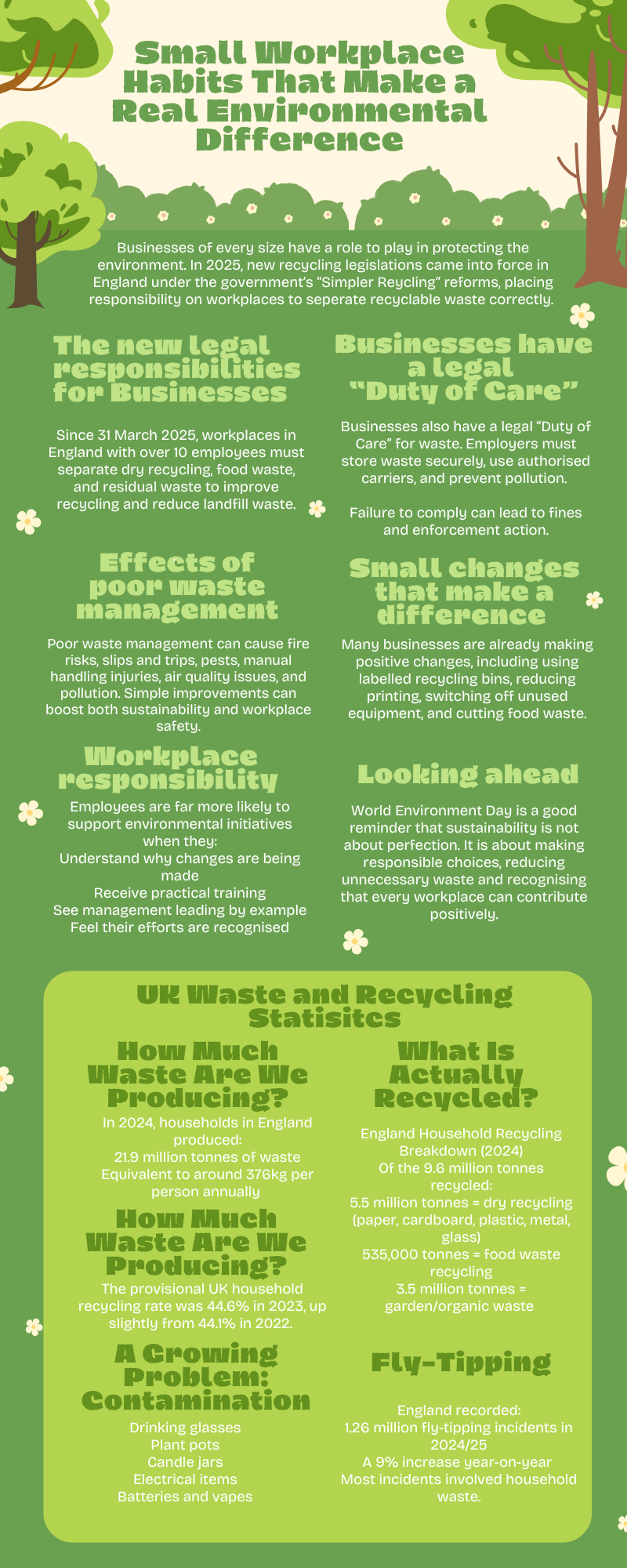
Every year, World Environment Day, which falls on June 5th 2026, reminds us that protecting the environment is not just the responsibility of governments or large corporations. Businesses of every size have a role to play — and often, it is the small daily habits that create the biggest long-term impact.
For many organisations, sustainability can feel overwhelming. Net zero targets, recycling legislation, waste audits and environmental reporting can sound complicated and expensive. However, meaningful environmental improvements often begin with simple, practical changes within the workplace.
In 2025, new recycling legislation came into force in England under the Government’s “Simpler Recycling” reforms, placing greater responsibility on workplaces to separate recyclable waste correctly.
This means sustainability is no longer simply good practice — it is increasingly becoming a legal and operational responsibility.
Contact us to find out more.
 As summer draws to a close and workplaces settle back into routine, September is the ideal time to reset and refocus on health, safety, and environmental priorities. The changing season brings new challenges, from darker mornings to increased workloads, and it’s important to ensure that teams, systems, and sites are prepared.
Back to Routine, Back to Basics
With many employees returning from holidays, September offers an opportunity to reinforce a strong safety culture. Refreshing toolbox talks, reviewing risk assessments, and ensuring staff are fully briefed helps to prevent complacency and sets the tone for the final quarter of the year.
Seasonal Safety Considerations
Supporting Wellbeing
September is also recognised for World Suicide Prevention Day (10th September), which highlights the importance of workplace wellbeing. Employers can take this as an opportunity to review mental health support, signpost resources, and promote open conversations. A healthy, supported workforce is also a safer one.
Environmental Focus for Autumn
A Time to Reset
September is more than just the start of autumn — it’s a natural checkpoint for businesses to ensure they are on track with health, safety, and environmental goals. By refreshing policies, preparing for seasonal risks, and supporting employee wellbeing, organisations can step into the final months of the year with confidence.
Contact us if you wish to discuss your health and safety requirements.
 As we move into summer, June brings rising temperatures and increased outdoor activity, especially in industries such as construction, agriculture, logistics, and grounds maintenance. While the sun may boost morale, it also presents serious health and safety risks. Heat stress, dehydration, and UV exposure can all affect employee health and performance—and if not managed properly, can lead to serious incidents.
This month, we explore how employers can effectively manage hot weather risks to keep staff safe, comfortable, and productive.
Key Risks of Working in Hot Weather
Employer Responsibilities
Under the Health and Safety at Work etc. Act 1974, employers must provide a working environment that is safe and without risk to health—including managing environmental risks like heat.
The Management of Health and Safety at Work Regulations 1999 also require employers to assess risks (such as heat stress) and take appropriate control measures.
Practical Tips for Employers
Industry Example – Telford-Based Outdoor Workforces
Local Telford businesses—such as those in grounds keeping, road works, and warehousing with outdoor exposure—can benefit from proactive planning. Companies are well-placed to lead by example, demonstrating how to integrate weather-related risk assessments into daily briefings and RAMS (Risk Assessment and Method Statements).
Conclusion
Heat is more than just a comfort issue—it’s a serious safety concern. By planning ahead, engaging staff, and adapting working practices, employers can meet legal obligations and protect their teams from the risks of summer work.
June is the perfect time to review your heat management plans and ensure everyone stays safe under the sun.
If you would like further information, please contact us.