Author Archives: Author


Published · Updated

Staying Safe This Autumn: October Health, Safety & Environmental Priorities

parkOctober marks a critical shift in the year. With darker evenings, cooler temperatures, and seasonal moisture, risks increase—but there’s also a strong opportunity to reinforce company culture and sustainability initiatives.

Key Focus Areas and Relevant UK Campaigns:

1. Seasonal Safety Focus

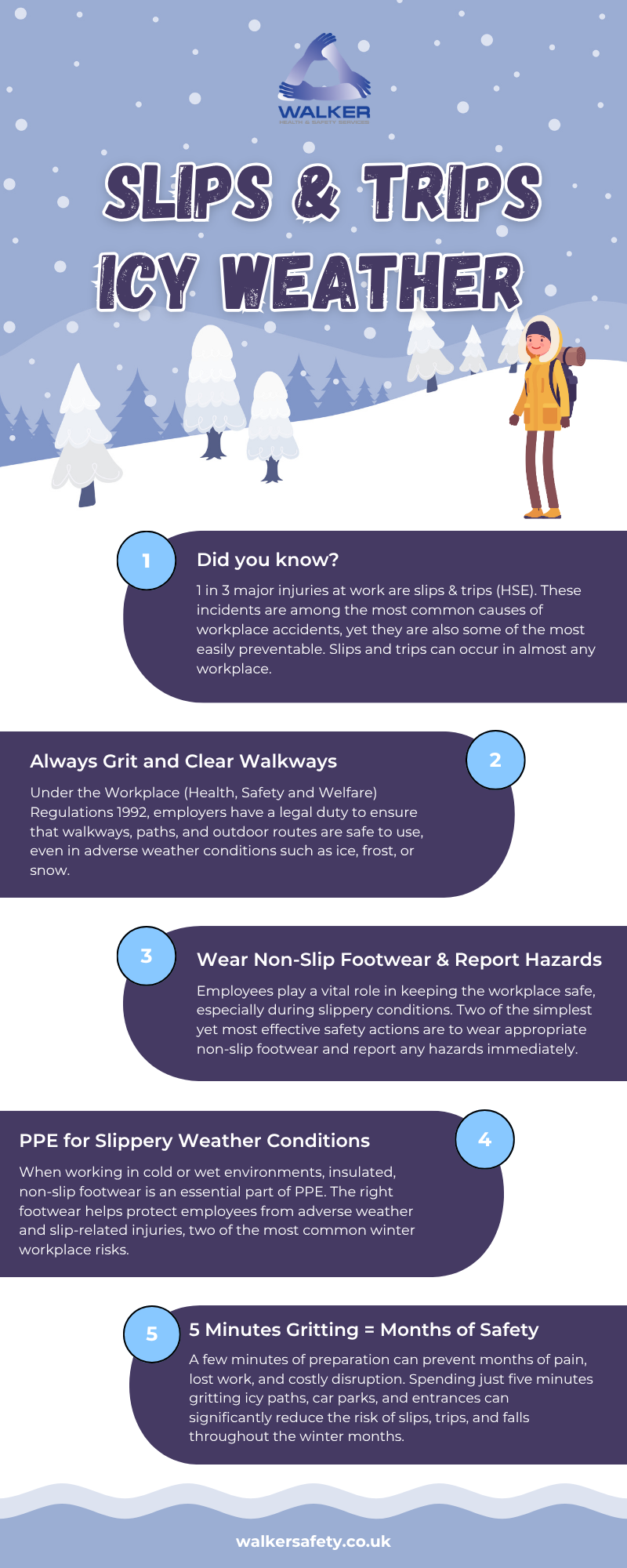
– Slips, Trips & Falls: Wet leaves and rain heighten outdoor hazard risks. Prioritise cleaning schedules, consider gritting walkways when needed, and reinforce appropriate footwear policies.
– Lighting Assessments: With days getting shorter, audits of external and emergency lighting help prevent accidents and bolster productivity.
– Equipment & Vehicle Checks: Drier and colder conditions can stress machinery and vehicles—proactive servicing reduces downtime and improves safety.

2. Mental Health Awareness

– World Mental Health Day – 10 October: This international observance offers a timely prompt to emphasise that mental wellbeing is integral to workplace safety. Encourage open dialogue, provide stress-related training for managers, and remind staff of available support services.

3. Environmental Responsibility

– Recycle Week 2025 – 14–20 October: Organised by WRAP, the theme “Rescue Me! Recycle” encourages better recycling habits across the UK (https://www.wearedisrupt.co.uk/event/recycle-week-2025). This makes it a perfect opportunity to launch or reinvigorate internal recycling campaigns, educate your team on proper segregation, and share WRAP toolkits and resources.

Why This Matters

October sets the stage for effective year-end HSE performance. Tying seasonal risks to mental health awareness and environmental action creates a compelling, multi-faceted blog that positions you as both proactive and socially responsible.

Contact us to discuss your health and safety requirements.


Published · Updated

September Safety Reset: Preparing for Autumn in Health, Safety & Environment

As summer draws to a close and workplaces settle back into routine, September is the ideal time to reset and refocus on health, safety, and environmental priorities. The changing season brings new challenges, from darker mornings to increased workloads, and it’s important to ensure that teams, systems, and sites are prepared.

Back to Routine, Back to Basics

With many employees returning from holidays, September offers an opportunity to reinforce a strong safety culture. Refreshing toolbox talks, reviewing risk assessments, and ensuring staff are fully briefed helps to prevent complacency and sets the tone for the final quarter of the year.

Seasonal Safety Considerations

  • Reduced Daylight: Shorter days mean a higher risk of slips, trips, and falls. Check external lighting, ensure walkways are clear, and review high-visibility PPE where necessary.
  • Fire Safety Checks: As heating systems are reintroduced, it’s a good time to schedule servicing, inspect fire alarms, and run evacuation drills. Prevention is always better than cure.
  • Workplace Transport: School traffic and delivery schedules are often busier in September. Employers should revisit safe vehicle movements, driver awareness, and pedestrian segregation.
  • Manual Handling: Many industries face heavier workloads in the run-up to Christmas. A reminder of safe lifting techniques and task planning can reduce the risk of injuries.

Supporting Wellbeing

September is also recognised for World Suicide Prevention Day (10th September), which highlights the importance of workplace wellbeing. Employers can take this as an opportunity to review mental health support, signpost resources, and promote open conversations. A healthy, supported workforce is also a safer one.

Environmental Focus for Autumn

  • Energy Efficiency: As temperatures drop, review energy use. Simple measures such as checking insulation, servicing heating systems, and encouraging switch-off policies can reduce costs and carbon impact.
  • Sustainable Transport: With World Car Free Day (22nd September), businesses can encourage alternative travel methods such as cycling, car sharing, or public transport to reduce emissions.
  • Waste & Grounds Maintenance: Autumn often brings seasonal waste from groundskeeping and stock turnover. Safe handling, correct disposal, and recycling opportunities should be prioritised.

A Time to Reset

September is more than just the start of autumn — it’s a natural checkpoint for businesses to ensure they are on track with health, safety, and environmental goals. By refreshing policies, preparing for seasonal risks, and supporting employee wellbeing, organisations can step into the final months of the year with confidence.

Contact us if you wish to discuss your health and safety requirements.


Published · Updated

Welbeing September 2025

In today’s fast-paced world, it’s easy to put our own wellbeing at the bottom of the list. We push through busy schedules, endless responsibilities, and the constant noise of modern life—often without stopping to think about how we truly feel. Yet, our wellbeing is the foundation for everything else we do.

When we take care of ourselves—physically, mentally, and emotionally—we’re not only healthier, but also more resilient, focused, and better equipped to handle life’s challenges. Investing in wellbeing isn’t a luxury; it’s a necessity that helps us thrive rather than simply survive.


Contact us if you wish to find out more.


Published · Updated

Give a Little, Gain a Lot: Volunteer with Telford & Wrekin’s Litter‑Picking and Snow Warden Schemes

At Walker Health and Safety Services Limited, we believe in giving back to the community we’re proud to call home. Supporting Telford & Wrekin Council’s volunteering schemes—including Street Champions and Snow Wardens—is a fantastic way to make a visible impact, strengthen community bonds, and boost your wellbeing.

But it’s not just for individuals. Businesses, too, can sign up as Street Champions and become local leaders in community pride.

Street Champions: Litter‑Picking for a Cleaner Telford

Whether you’re a resident, a family, or a local business, you can become a Street Champion and help keep Telford & Wrekin clean and litter-free.

By signing up, your business or organisation can take ownership of a street, park, or local space and receive equipment and support to organise clean‑ups.

What’s provided:
– Free kit for each volunteer: high‑vis vest, gloves, litter picker, hoop, waste sacks
– Insurance cover while volunteering
– Support from the Council for collecting rubbish after your clean-ups
– Option to take part in wider campaigns like the Great British Spring Clean

Why your business should join:
– Boost your CSR (Corporate Social Responsibility) profile
– Show commitment to your local environment
– Great team-building opportunity
– Gain positive local publicity
– Build relationships with the community

Sign up: Telford & Wrekin Council | Street Champions

Email: pride.officer@telford.gov.uk | Phone: 01952 380455

Snow Wardens: Helping Neighbours in Winter

Snow Wardens are volunteers who help keep public footpaths and pavements safe during icy and snowy weather. This is particularly valuable in helping elderly or vulnerable residents stay safe and mobile.

Your business can encourage team members to sign up individually—or adopt areas near your premises to clear as part of your winter preparedness and community support.

What’s provided:
– High-vis vest, gloves, shovel, rock salt
– Support and updates during adverse weather
– Council insurance while volunteering

Sign up: Telford & Wrekin Council | Snow wardens

Email:  snowwardens@telford.gov.uk | Phone: 01952 380455

The Social Side: Why It’s Fun, Not Just Functional

Volunteering isn’t just about the task—it’s about the people you meet and the sense of pride you gain. Whether you’re picking litter with your team, helping during the snow, or joining a borough-wide event like the Great British Spring Clean, you’ll:

– Meet like-minded people
– Boost morale and well-being
– Make a real difference in your neighbourhood
– Get a bit of exercise and fresh air in the process!

Local Business Champions: Leading by Example

More and more businesses are stepping up to show pride in their communities. Becoming a Street Champion business is a fantastic way to lead by example, engage your team, and contribute to the place you trade, work, and live.

Imagine the benefits:
– Featuring your team’s efforts on your social media and website
– Receiving recognition in community newsletters
– Strengthening your brand’s reputation for environmental and social responsibility

You could even sponsor a regular clean-up, adopt a local green space, or partner with a local school or care home for a joint event.

How to Get Involved

Whether you’re picking up litter, clearing snow, or just spreading the word, your contribution matters. Businesses have a unique opportunity to lead the way—so why not register today and show your community spirit?

At Walker Health and Safety Services Limited, we’ll be joining in—and we hope to see you out there with us!

Contact us if you would like further information, or want to invite us along.


Published · Updated

Fire evacuation times

People escape to fire exit door

People escape to fire exit door

How long should it take to evacuate your premises in the event of a fire?

Fire safety practitioners are often asked, particularly after a fire drill, how long it should take to evacuate the premises.

What, on the face of it, appears to be a simple question has quite a complex answer, particularly in view of the UK’s risk-based fire safety regime.

Those responsible for fire safety need to know what would be deemed to be a safe evacuation time and the factors that influence this.

Legislative requirements

Legislation, such as the Regulatory Reform (Fire Safety) Order 2005 (RRFSO), does not prescribe any evacuation times. Rather, the RRFSO states that “in the event of danger, it must be possible for persons to evacuate the premises as quickly and as safely as possible”.

The reason for this is that, unlike fire certification arrangements under the old regime, where each certificate was building specific, the RRFSO applies to a wide range of buildings, therefore making it impossible to prescribe evacuation times.

Guidance to the RRFSO does contain further information on evacuation times. For example, guidance for office environments notes that “escape routes in a building should be designed so that people can escape quickly enough to ensure they are not placed in any danger from fire”.

The key phrase here is “should be designed”. This clearly indicates that designers of buildings need to consider the design of the means of escape as part of the overall design of the property so that occupants can move to a place of reasonable and/or total safety before the conditions in the property become untenable.

Certainly, designers should be following the requirements of the respective Building Regulations and associated guidance such as that contained in Approved Document B: Fire safety, BS9999:2017 Fire Safety in the Design, Management and Use of Buildings and BS ISO 20414:2020 Fire Safety Engineering. Verification and Validation Protocol for Building Fire Evacuation Models.

It is key that the fire safety practitioner responsible for fire evacuation in a property as occupied has access to and can share necessary information in relation to the design of the means of escape are provided.

Although this information will not provide an exact evacuation time, it will enable:

  • fire risk assessments/analysis
  • the fire evacuation strategy
  • escape route design.

This information is particularly important given the current emphasis on the “golden thread” of information approach for buildings that is recommended following a review into the Grenfell fire.

Human behaviour

It is widely recognised that up to two-thirds of actual evacuation time consists of occupants delaying when the evacuation signal is given.

These factors are built into what are known as the:

  • available safe escape time (ASET): calculated time available between the moment of ignition and the estimated time at which conditions become untenable
  • required safe escape time (RSET): calculated time available between ignition and the time occupants in a specified space in a building are able to reach a place of safety.

For safe evacuation to occur, the ASET must be significantly longer than the RSET. There are a number of factors that will affect the RSET and ASET. These include the time:

  • from ignition to detection of fire
  • from detection to alarm
  • taken by occupants to recognise the alarm
  • for response once the alarm is recognised
  • to move to safety.

In theory the fire safety practitioner should be able to rely on the RSET and ASET and be confident that the evacuation time will be within this scope.

However, there are many factors that may affect the RSET and ASET in “real world” conditions, not least:

  • if the fire detection and alarm system is not maintained in a state of good repair and efficient working order so as to give early warning of fire
  • where unauthorised changes affect the means of escape and/or damage the integrity of the protection against the ingress of fire and smoke (eg propped open fire doors)
  • changes in use of the property that have altered the fire risk profile or occupant profile
  • general wear and tear and/or lack of maintenance of elements of the means of escape (eg damaged fire doors)
  • older escape design not meeting current standards of design (eg no strips and seals on fire doors)
  • occupants’ behaviour.

The fire risk assessment

If occupants are unable to evacuate in a timely manner this could result in a breach of relevant fire safety legislation and increase the risk of injury or death.

PAS 79-1:2020 Fire Risk Assessment. Premises Other Than Housing. Code of Practice, notes that “an assessment should be made of the likely consequences of fire”.

The assessment should “understand that all persons within the premises should be able to reach a place of ultimate safety before life threatening conditions arise; either unaided or with the assistance of staff — without FRS assistance (RSET versus ASET)”.

In assessing this aspect, the fire risk assessor may consider a number of inputs into the process including:

  • previous fire evacuation outcomes (how long it took to evacuate)
  • whether the fire evacuation strategy was followed
  • the needs of those who may require assistance
  • the condition of the means of escape (eg damage/unauthorised changes)
  • the type of fire detection and warning system in place
  • fire safety culture influencing behaviours.

These could then be used to determine (usually in a qualitative manner) whether the ASET/RSET requirements are being met or whether real-life evacuation takes longer, creating a situation where occupants may be at risk of harm.

The key elements of fire evacuation

  1. All occupants must be able to reach a place of reasonable and/or total safety before the means of escape become untenable.
  2. Information regarding the fire evacuation design and means of escape should be provided to those responsible for fire safety in the occupation stage of the building’s lifecycle. For older premise, however, such information may not be available.
  3. As such, the duty holder/person responsible for fire safety should, through the fire risk assessment, seek assurance that the occupants can reach a place of reasonable or total safety before the buildings means of escape become untenable.
  4. The risk assessment should take into account any factors that may influence the ASET/RSET and confirm that the time needed to evacuate the premises is within the limits that the means of escape have been designed for.
  5. Where the fire risk assessment identifies problems with evacuation, the responsible person will need to determine the actions required to address these issues, eg influencing work culture to improve response times or material changes to the means of escape or alarm systems.