Category Archives: Health and Safety


Published · Updated

Wellbeing: Quick Facts

Employee wellbeing is concerned with both the physical and emotional health of employees, helping to prevent problems arising or, if they do, helping employees to cope with them so as to have a minimal impact on their work — in short, to be more resilient.

Wellbeing is a multi-layered subject, involving not just the human resources department but the health and safety profession as well.

This topic discusses why employers should invest in employee wellbeing programmes and how employers can help improve the welfare of their employees. Continue reading →

Published · Updated

Improving well being in construction

The construction sector is proving to be one of the worst cases.

Several reasons have been suggested for particularly poor health, safety and well being figures in the construction industry, including the large numbers of transitory workers. You can imagine eyes glazing over at yet another health and safety induction. Meanwhile, there is a suspicion that some of the smaller companies are less committed to health and safety principles. Further improvements, it is suggested, must come from really understanding how people feel about the work and jobs — a potentially tough nut to crack.

In construction, this means moving away from its traditional macho culture. Evidence has shown that the increasing presence of women in the North Sea oil and gas industry over the past two decades quickly marginalised cavalier attitudes to safety. Would more women in the sector change attitudes to health? Continue reading →
Published · Updated

Corporate Manslaughter and Corporate Homicide Act 2007: Quick Facts

The Corporate Manslaughter and Corporate Homicide Act 2007 came into force on 6 April 2008, and introduced a new offence for prosecuting companies and other organisations where there has been a gross failure in the management of health and safety with fatal consequences. This topic outlines types of manslaughter and some of the key areas of the Act.

  • Corporate manslaughter is a type of involuntary manslaughter (killing by gross negligence).
  • Before the 2007 Act, successful corporate manslaughter prosecutions were extremely rare because of the need to identify a “directing mind” of the company who was guilty.
  • Unlimited fines may be imposed, and the courts may force companies to publicise their convictions through a publicity order, leading to severe damage to reputation.
  • Under the legislation, individual directors will not be liable for any deaths due to a general breach of the duty of care by the firm.
  • Employers should take steps to review their management structures and health and safety policies.

Contact us should you require assistance.


Published · Updated

Health and Safety at Work, etc Act 1974: Quick Facts

Industrial CleaningThe Health and Safety at Work, etc Act 1974 (HSWA) is the primary piece of health and safety law in the UK. It lays down broad principles for managing health and safety in all workplaces with the exception of servants in domestic premises and many government bodies, which cannot be prosecuted under the Act.

The HSWA is an enabling Act, which means it is the legal facility under which other health and safety regulations, eg the Management of Health and Safety at Work Regulations 1999, are made.

As this topic describes, the HSWA is part of statute law and breaches can result in prosecutions, which means offences are punishable in the courts, and fines and prison sentences can be imposed.

  • The Health and Safety at Work, etc Act 1974 (HSWA) is the primary piece of legislation covering the main principles of health and safety
  • The HSWA aims to prevent the risk of injury rather than the injury itself. Thus a criminal offence is committed each time the terms of the Act are breached, regardless of whether or not anyone is actually injured by the breach
  • Under the Act, employers have a general duty to ensure the health, safety and welfare of their employees
  • The HSWA imposes a duty on people who are in charge of premises which carry out a trade, business or other undertaking (whether for profit or not) to use the best possible means to prevent the emission of noxious or offensive substances, and to render those substances harmless and inoffensive
  • If five or more people are employed, employers must have a written health and safety policy
  • Employers must ensure that articles or substances used at work are safe and that they do not expose the users to health risks
  • Employees must ensure their own health and safety and that of others while at work and co-operate with their employers in matters relating to health and safety
  • Issues of enforcement, the powers of inspectors, etc are detailed in the HSWA
  • Directors and managers also have health and safety duties

Contact us if you require any assistance.


Published · Updated

Machinery Safety: Quick Facts

Machinery can pose a wide range of hazards to users and bystanders. As such, the control of machinery hazards is of paramount importance. Adequate training and instruction must be provided.

This blog provides an overview of the measures that need to be taken to protect operators and others from the hazards of machinery.

  1. The principal mechanical hazards are from contact with moving parts of the machinery resulting in entanglement, crushing, cuts, stabbing, punctures, fractures or amputation of fingers, hands or limbs.
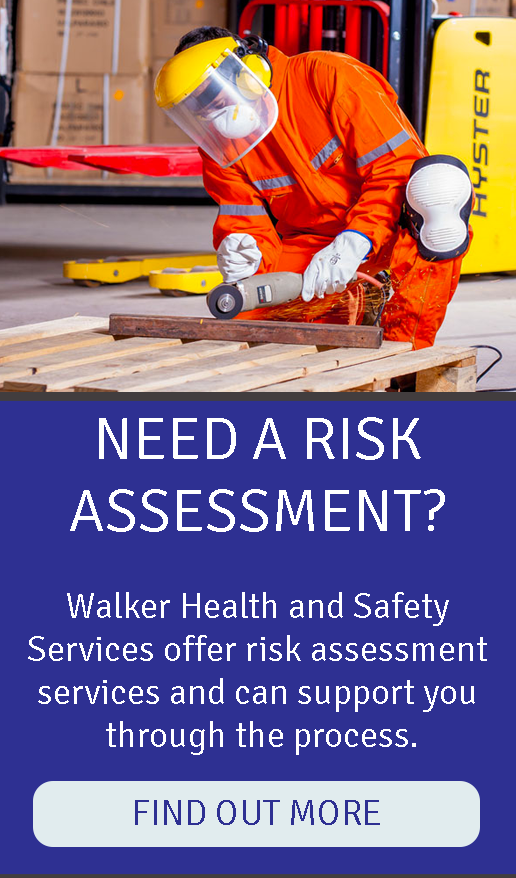
  2. A risk assessment of all machinery must be carried out. It will help to define an action plan to eliminate or reduce the identified hazards.
  3. Before selecting employees to work with equipment, the job and personal attributes required for the job need to be specified. This will ensure that unsuitable candidates are not considered.
  4. Where employees cannot be completely excluded from hazards, a safe system of working should be adopted. The level of supervision should increase as the level of risk increases.
  5. If there are risks of serious injury or death, and no more secure method of risk reduction is practical, then a permit-to-work system should be introduced
  6. Training should be carried out to ensure that operators understand the hazards on the machinery, the precautions to be taken and the procedures to be adopted to ensure that they can carry out their tasks safely. Read our previous blog on staff working with machinery. https://walkersafety.co.uk/2016/07/staff-working-with-machinery/

Contact us, should you require further information.