PPE is the last line of defence in the hierarchy of control — but it only works when it is selected correctly, worn consistently, and inspected properly. Under UK law, employers have a legal duty to ensure PPE is suitable, maintained, and used correctly, while employees have a duty to wear it and cooperate with safety measures.
Yet PPE meetings often fail because they simply repeat “wear your PPE.” Effective sessions explore why workers remove PPE — discomfort, poor fit, fogging, restricted movement, or a belief that the risk is low — and how to fix those issues.
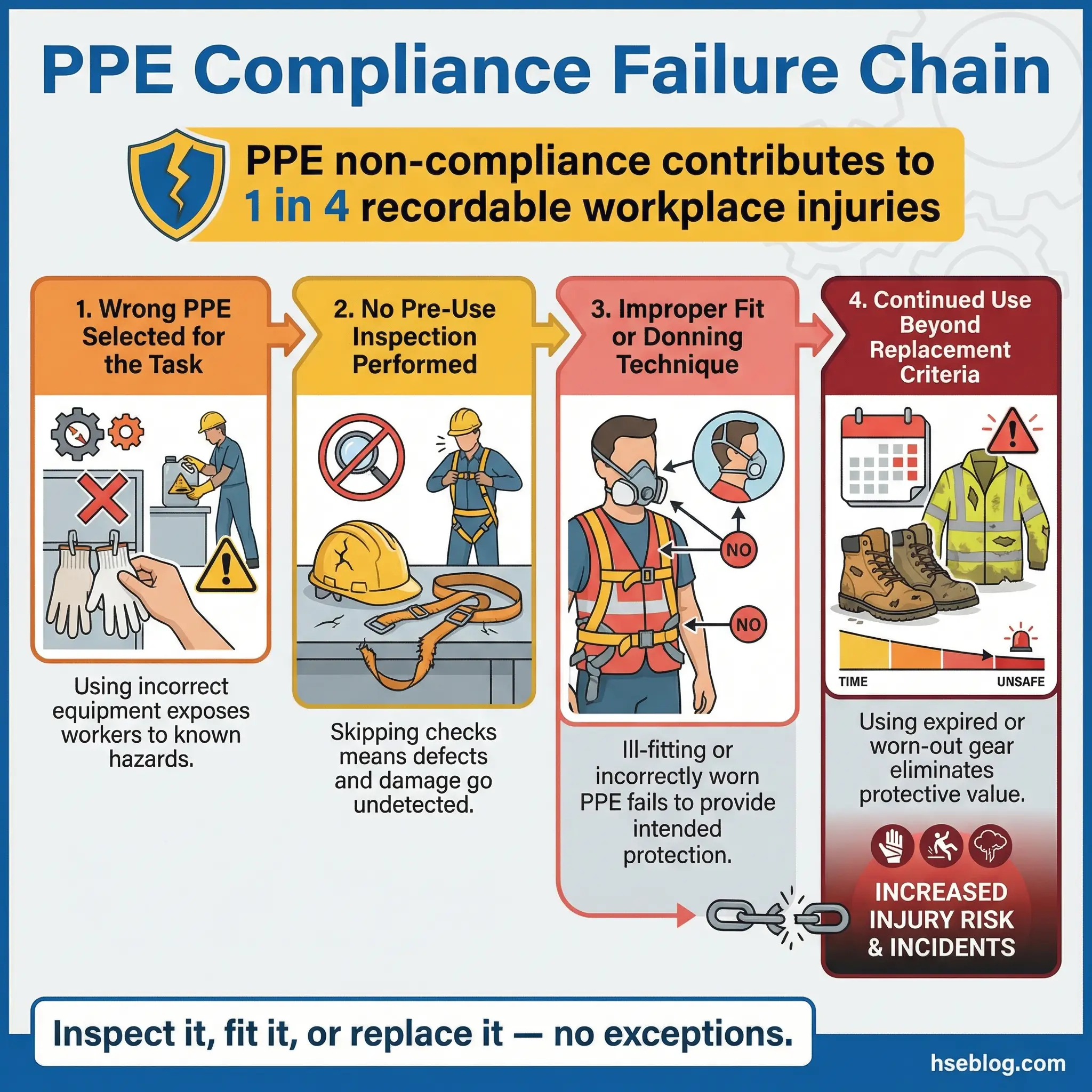
Your infographic highlights the four common failure points:
A key stat:
PPE non‑compliance contributes to 1 in 4 recordable workplace injuries.
This is why PPE selection must be task‑specific, evidence‑based, and reinforced through training.
Employers must ensure, so far as reasonably practicable, the health, safety, and welfare of employees. This includes providing suitable PPE, safe systems of work, and adequate training.
Employees must:
Requires employers to:
Key requirements:
Relevant where PPE interacts with machinery:
PPE selection must be driven by a formal hazard assessment, not habit or availability. In UK terms, this means:
Workers should understand why a specific glove, visor, respirator, or hearing protector was chosen — not just that it was issued.
Workers must inspect PPE before every shift, checking for:
Under UK law, employers must ensure PPE is maintained and replaced, but employees must report defects immediately.
Incorrect removal of contaminated PPE can transfer hazards to skin or clothing. Training should cover:
This is especially critical for chemical, biological, and dust‑related PPE.
Workers must know when PPE needs replacing, not just when it looks damaged.
Examples:
Clear replacement criteria reduce risk and improve compliance.
Hands‑on sessions work best. Let workers compare:
Informed selection beats forced compliance every time.
PPE is only effective when it’s selected correctly, worn properly, inspected regularly, and replaced promptly. Under the Health and Safety at Work etc. Act 1974, employers have a duty of care to provide suitable PPE and maintain safe systems of work, while employees must use PPE responsibly and report defects.
When both sides fulfil their obligations — supported by the Management of Health and Safety at Work Regulations 1999, PPE at Work Regulations 1992 (as amended 2022), and PUWER 1998 — PPE becomes a reliable safeguard rather than a box‑ticking exercise.
Inspect it, fit it, or replace it — no exceptions.
Contact us for further information.
Guest Blogging
If you feel that you could contribute to this blog then please feel free to send me a proposal of your guest blogging ideas and we can discuss these further info@walkersafety.co.uk . Please note any proposals must be of benefit to my readers from individuals with knowledge of their subject matter.