 What is tinnitus?
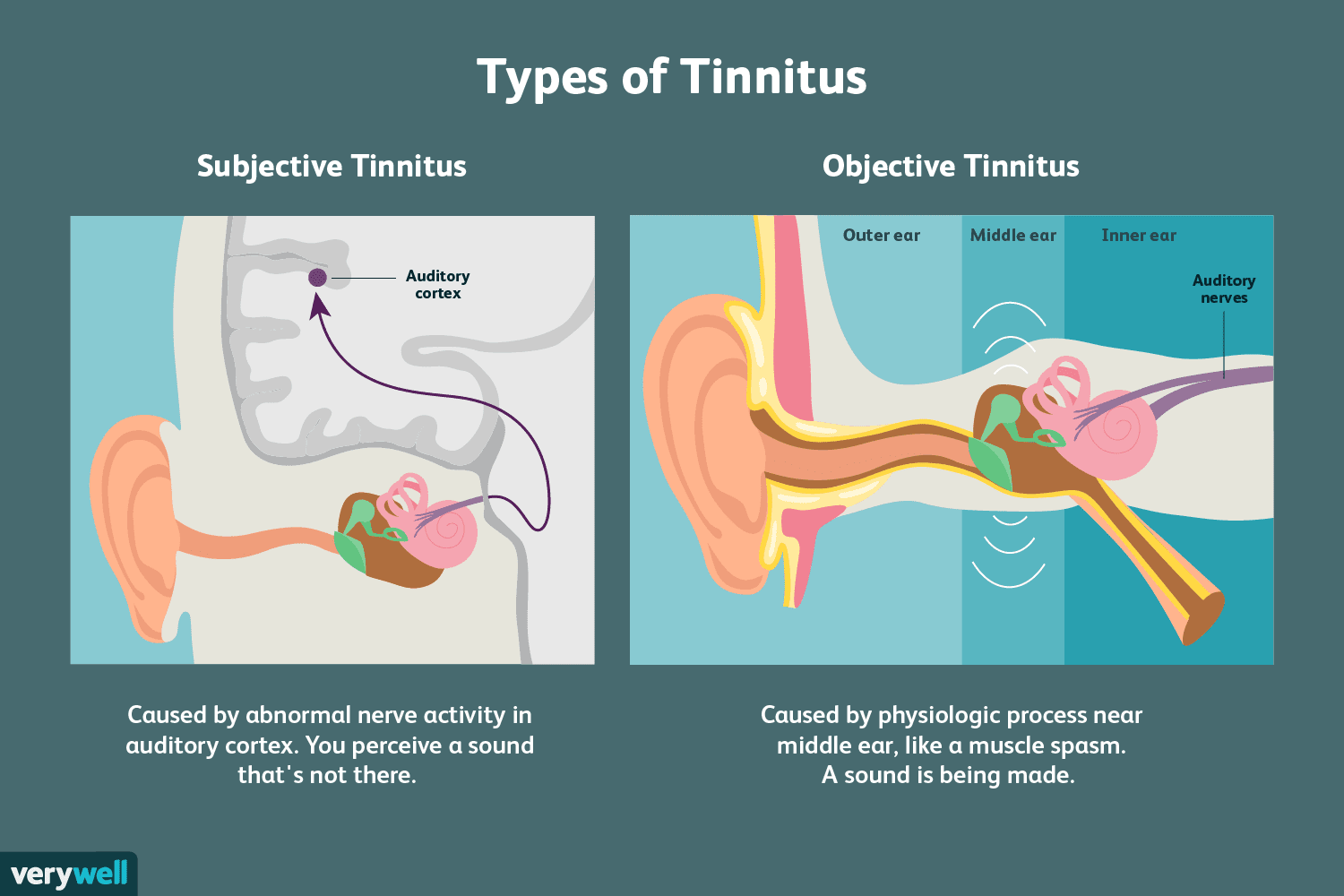
Tinnitus UK (formerly British Tinnitus Association) describes tinnitus as “the sensation of hearing a sound when there is no external source for that sound”. The symptoms may be felt as ringing, buzzing, hissing, clicking, whistling, whooshing sounds, etc and may be constant or intermittent, varying in volume from person to person. Tinnitus is thought to affect around 13% of adults in the UK.
According to Tinnitus UK, the noise may be in one or both ears, or it may feel like it is in the head. It may be low, medium or high pitched and can be heard as a single noise or as multiple components.
Occasionally people have tinnitus that can seem like a familiar tune or song, known as musical tinnitus or musical hallucination. Others have tinnitus which has a beat in time with their heartbeat — known as pulsatile tinnitus.
The symptoms are usually caused by an underlying condition with strong links to hearing loss in general.
The Tinnitus Awareness Week is an annual campaign dedicated to raising awareness and educating people about the causes, impact and management of tinnitus. This year’s event will be held from Monday 5 to Sunday 11 February.
Research conducted by the Health and Safety Executive (HSE) has indicated that the prevalence of tinnitus in workers exposed to noise at work is significantly greater than in workers not exposed to noise.
Therefore, jobs at particular risk of tinnitus are those characterised by loud or prolonged noise. For example, carpenters, construction and manufacturing workers, airport staff, musicians, call centre personnel and street workers could be among those at risk, as are people who work with chain saws, guns or other loud equipment as well as those who are exposed to loud music at work.
However, causes can also be completely unrelated to noise at work and linked to non-work-related hearing loss as well as ear infections or various illnesses such as diabetes, thyroid disorders, multiple sclerosis, anxiety, depression and Ménière’s disease.
According to the NHS, tinnitus can also be caused as a side effect of some chemotherapy medicines, antibiotics, non-steroidal anti-inflammatory drugs (NSAIDs) and aspirin.
In the context of tinnitus, if noise in the workplace regularly reaches 80 to 85 decibels, to protect their staff, the employers could take steps such as:
The Control of Noise at Work Regulations 2005 apply to all industry sectors in Britain and aim to ensure that workers’ hearing is protected from excessive noise, which could cause them to lose their hearing and/or to suffer from tinnitus. See the Noise topic for information and guidance.
The HSE warns that many thousands of people are exposed to loud noise at work that may be a risk to their hearing.
In addition, ototoxic chemicals — substances which can harm hearing, even in the absence of noise levels — also carry risks which can be under-acknowledged, but are associated with often life-changing effects related to hearing loss. See our feature The life-changing risks of ototoxic chemicals.
In a survey, 42% of tinnitus sufferers believed that their condition had an adverse effect on their work, and loss of concentration, lack of sleep and anxiety associated with the condition can all make working more difficult. However, tinnitus can also impact on working in other ways including, for example, difficulties:
Employers also need to understand their responsibilities to staff with tinnitus or hearing loss under the Equality Act 2010 and will need to be prepared to make reasonable adjustments to support staff with hearing difficulties.
It is recommended by Fit for Work advisors that people who have hearing loss or tinnitus inform their managers of their condition and discuss changes that could help, such as moving to a different workstation, changing meeting venues or reducing stress.
Also helpful is an online resource called Take on Tinnitus. It has been designed primarily for people who have just begun to experience tinnitus. However, it is also a valuable resource for those who have experienced the condition longer term.
Some cases of tinnitus, such as those caused by the build-up of ear wax or because of an ear infection, can be treated by a doctor. In other cases, there is no cure, and treatment is focused on developing coping mechanisms in order to live with the condition. Various therapies may be helpful including the following.
A wide range of treatments and a number of specific medications, including antidepressants, amitriptyline and melatonin for example, have been reviewed by Tinnitus UK and evaluated using an extremely helpful traffic light system, based on their safety and efficacy.
Tinnitus UK runs a chat service via its website.
In addition, there is a network of tinnitus support groups around the country, listed via Tinnitus UK’s website, where people can develop and learn about new coping skills and gain inspiration and encouragement from others.
Tinnitus UK runs a large research grants programme to support tinnitus research. It recently partnered with scientists and academics from the Nottingham Biomedical Research Centre and the Universities of Nottingham and Newcastle to conduct innovative research, using imaging data from thousands of brain scans held in the UK Biobank, a major national and global health resource. It is thought that chronic tinnitus may be associated with changes in the structure of the brain, and that reversing these changes might prove effective in the treatment of the condition.
It is estimated that tinnitus affects over seven million people in the UK at present, and many people elsewhere around the world, potentially causing stress, sleep difficulty, anxiety and compromising hearing.
As research efforts continue, it is hoped that soon a cure for this enigmatic and distressing medical problem will be found.
If you have any queries, please contact us.
 World Cancer Day is held on 4 February every year and this year is the final stage of the event’s current three-year “Close the Care Gap” campaign to raise awareness and improve cancer diagnosis and treatment for nations and communities around the globe, including people at work. Jon Herbert reports.
Established on 4 February 2000, the World Cancer Day aims to promote research, prevent cancer, improve patient services, raise awareness and mobilise the global community to make progress in cancer care. Titled “Close the Care Gap”, the current three-year (2022–2024) campaign for World Cancer Day is about addressing the barriers that prevent people around the world from accessing the cancer care they need.
This year sees the end of this international campaign based on the message “Create a future without cancer — the time to act is now”. The organisers, the Union for International Cancer Control (UICC), want governments around the world to promote health equity, enhance cancer service accessibility and reduce disparities in cancer incidence and mortality, to finally “close the care gap”.
They also hope that the 2024 message of “Uniting our voices and taking action” will create an opportunity for many to celebrate their own, or someone else’s recovery, from cancer. However, they acknowledge that the day can also be a complicated and emotional one.
People and organisations not sure how to support someone on World Cancer Day can refer to this information.
Below is a summary of the ongoing three-year World Cancer Day awareness campaign.
2024: Together, we challenge those in power — This final year will concentrate on engaging world, national and local leaders and demanding a commitment for prioritising cancer to “shake the very foundations of injustice” that it says many communities and groups suffer.
2023: Uniting our voices and taking action — The second year of the campaign focussed on bringing together the power of like-minded people. Real-world progress included building stronger alliances and innovative new collaborations — such as motivating neighbours to provide cancer treatment transport, and ensuring healthy and affordable food options are offered at local schools.
2022: Realising the problem — The first year of the “Close the Care Gap” campaign involved understanding inequities in cancer care around the globe with an open mind that challenges assumptions and looks at hard facts.
It added that people seeking cancer care can be hit by barriers at every turn — from income to education, location and discrimination based on ethnicity, gender, sexual orientation, age, disability and lifestyle. However, these are not set in stone and can be changed.
Another priority has been helping to reduce the stigma of cancer, listening to perspectives of people living with cancer and letting their experiences guide thoughts and actions.
Macmillan Cancer Support is one of the largest UK charities and a leading cancer support organisation for the three million people in Britain currently living with cancer. It is also a major World Cancer Day supporter. Its initiative, Macmillan at Work, provides information, training and resources to help employers support their staff affected by cancer, as well as advice for employees.
The service is free and includes an Essential Work and Cancer Toolkit and access to Macmillan’s expert training.
According to Macmillan, 393,000 people in the UK are diagnosed with cancer each year. On an average, a diagnosis is made at least every 90 seconds. Cancer incidences in the UK have risen by 19% in the last decade and 40% since 2002.
HSE says occupational cancer can be caused by significant exposure to carcinogens in the workplace, often over a prolonged period. Carcinogens can be solid substances, liquids, mixtures, vapours, gases, dusts or even radiation.
Businesses need to have proper procedures in place to minimise cancer risks. However, they can also do much to support employees with cancer and others affected in their lives and the workplace. See Beating cancer… globally and in the workplace.
Work is important for many people with, or caring for someone with, cancer for numerous reasons. It can create a sense of normality and help with recovery. Managers and employers play a key supporting role.
A person who has, or has had, cancer is protected by law from unfair treatment at work for the rest of their life. Under equality laws, companies must try to support employees, including making reasonable adjustments to help them stay in, or return to, work when ready and able.
When making reasonable workplace or working pattern adjustments, the employee needs to be involved. Simple first steps could be to: talk and understand the employee’s needs, provide training for managers, check policies are up to date, educate all employees and raise cancer awareness.
Supporting employees affected by cancer can be difficult for small enterprises with concerns about impacts on their company teams and day-to-day activities. Information about legal responsibilities and supporting employees through cancer or a bereavement is available on the Macmillan Cancer Support website.
The leaflet 10 Top Tips for Line Managers offers top tips for managers to help them support staff who are affected by cancer.
Your Navigate Safety service includes a Working with Chronic Health Conditions Policy to download as well as in depth information relating to occupational exposure in the Carcinogens topic.
Macmillan Cancer Support’s Work and Cancer webpage answers commonly asked questions about work and cancer, including help with money and finances.
To help both employers and employees, it looks specifically at the following questions.
This is of concern to everyone affected and how you can get help is detailed here.
Specifically, this page looks at fatigue, risk of infection, bruising and bleeding, numbness or tingling of the hands and feet, changes in appearance, difficulty writing, plus other side effects or symptoms.
People with cancer-related fatigue tire more quickly and may find it very hard to do their usual tasks, concentrate or make decisions, and may feel more emotional and less patient than usual.
Some cancer treatments, such as chemotherapy, can reduce white blood cells count in the body. White blood cells fight infection. With fewer of these cells, there is a higher likelihood of infection which may prevent an employee from being able to work. Also, it is important for them to avoid other people with symptoms of illnesses that may be infectious, such as a sore throat, cold, flu, diarrhoea, vomiting and other kinds of infection, like chickenpox.
People in paid employment who have, or have had, cancer are entitled to ask their employers to consider making reasonable adjustments under the Equality Act and the Disability Discrimination Act.
Employers must make such adjustments when the workplace or work practices put employees with cancer at a “substantial disadvantage” compared with colleagues who do not have cancer. The disadvantage has to be “more than minor or trivial”.
Employees are not obliged to tell employers that they have cancer. But employers do not have to make reasonable adjustments unless they know, or should reasonably know, that employees have cancer, for example, because of different behaviour. It is reasonable for employers to check whether this is connected to a disability. They can then ask how they may provide support.
Examples of adjustments are more flexible working arrangements, scheduling time around the days an employee is most needed at work, agreeing which tasks are most important, what can be managed and what other staff might do to help, changing duties, or making any changes to an employee’s role the employee thinks would help.
Other options include working from home when possible, having someone else assess which phone calls need to be taken and which emails are forwarded, telling colleagues how workloads will be managed and contact arrangements.
Eating well and keeping active are also important, as is relieving emotional stress.
Direct information via mobiles and landlines is available free of charge from 8am to 8pm by calling 0808 808 00 00. The Macmillan Support Line can also be accessed. The Macmillan Chat Service offers confidential support to people living with cancer and those supporting them.
Macmillan also runs an Online Community. This online forum with a safe environment is available 24 hours a day and has more than 80,000 members who have been directly affected by cancer.
In Your Area is an online directory of cancer support services, self-help and support groups and fundraising events across the UK.
Since 2000, World Cancer Day on 4 February has been a focus point for improving worldwide cancer prevention, diagnosis and treatment, while also reducing fear, dispelling misleading myths and altering unhelpful behaviour and attitudes.
This year is the last of a three-year campaign around the message “Create a future without cancer — the time to act is now” that wants governments to promote health equity, enhance cancer service accessibility, reduce disparities in cancer incidence and mortality, to finally “close the care gap”.
Information on how to support World Cancer Day can be seen here.
Macmillan Cancer Support provides information, training and resources to help employers support their help staff affected by cancer, plus advice for employees.
There is a lot of information to go through. If you require further advice, contact us so we can point you in the right direction.
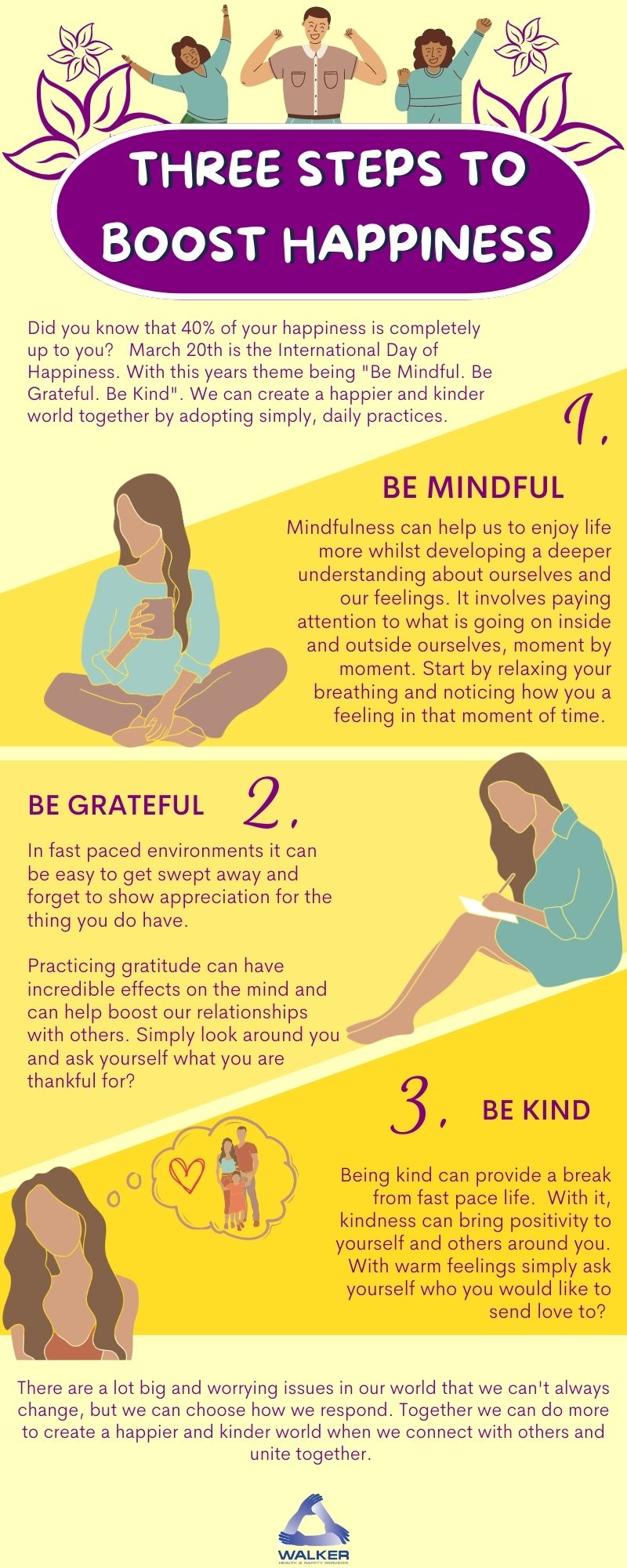
Here are three simple steps you can use anytime and anywhere to give yourself a boost and build your compassion for others.
By tuning in to your feelings, looking for what’s good and sharing kindness you can nurture yourself and help make things better day by day.
Please give it a try and, if you find it helpful, share it with others too.
Follow these useful links for further information.

Is workplace noise contributing to employee burn out?
The HSE have recently highlighted how workplace noise could be contributing to stress levels in employees working in the hospitality industry. Businesses in this industry are being urged by the HSE to reassess noise levels as they fear this could be contributing to workplace stress. This comes after a recent survey which exposed restaurants in London as having the highest workplace noise levels in Europe.
According to a recent article, over half of the restaurants tested had noise levels over 76 decibels, which is around the same loudness as a lawn mower. And as if that wasn’t bad enough, the noise levels during peak times often exceeded 80dBA.
Workplace noise is regulated by the HSE and the ‘Control of Noise at Work Regulations 2005’. This states that employers must assess risk to employee health when noise reaches a level of 80dBA. At these noise levels, information and training should be provided to staff. However, if these noise levels reach 85dBA, employers are legally required to provide hearing protection and specialist hearing protection zones.
The HSE is now working alongside ‘The Burnt chef Project’ to raise awareness of the signs of stress within hospitality workers. This looks to specifically address when noise levels reach a dangerous level so that employers can respond to and reduce any risk to workplace health.
Adding to unsociable hours and tough working conditions, the hospitality sector needs to now be aware that they face legal obligations to protect their employees from noise. A combination of these conditions could lead to rising levels of stress and employee burnout.
The HSE remains committed to looking after employee mental health and wellbeing as much as physical health and safety, commenting that “We need to make looking after our mental health just as routine as managing safety at work. The first thing for employers to be aware of is that the law requires employers to assess the potential risk from work related stress and act on it.” (cite)
As part of our range of occupational hygiene services, we regularly visit our customers’ sites to measure workplace and environmental noise. From an overall perspective, workplace noise can contribute to many health problems that can make working hazardous. Employers have a legal duty to ensure their employees have a safe working environment to both reduce worker health problems, and also to protect their business.
Many businesses fall into the trap of thinking that something will never happen on their premises. However, last year alone the HSE has fined UK businesses £26.9 million (cite) for breaches of health and safety.
Businesses in the hospitality industry that haven’t yet had a workplace noise assessment, really need to be planning for one ASAP.
Contact us to book a call to discuss your workplace noise requirements.
Guest blog Safety First Group Ltd
Why have this talk? First aid is emergency aid. It aims to minimise injury and illness until qualified medical help arrives. It can save lives.
What will this talk cover? How first aid is provided by the organisation and what to do if someone falls ill or is injured.
Past blogs of interest
First Aid Cover During Reduced Staffing as a Result of Covid-19 (walkersafety.co.uk)
What Should be in a First Aid Box | Health and safety blog (walkersafety.co.uk)
Do you have first aid training? | Health and Safety Blog (walkersafety.co.uk)
Contact us if you wish to discuss this topic.