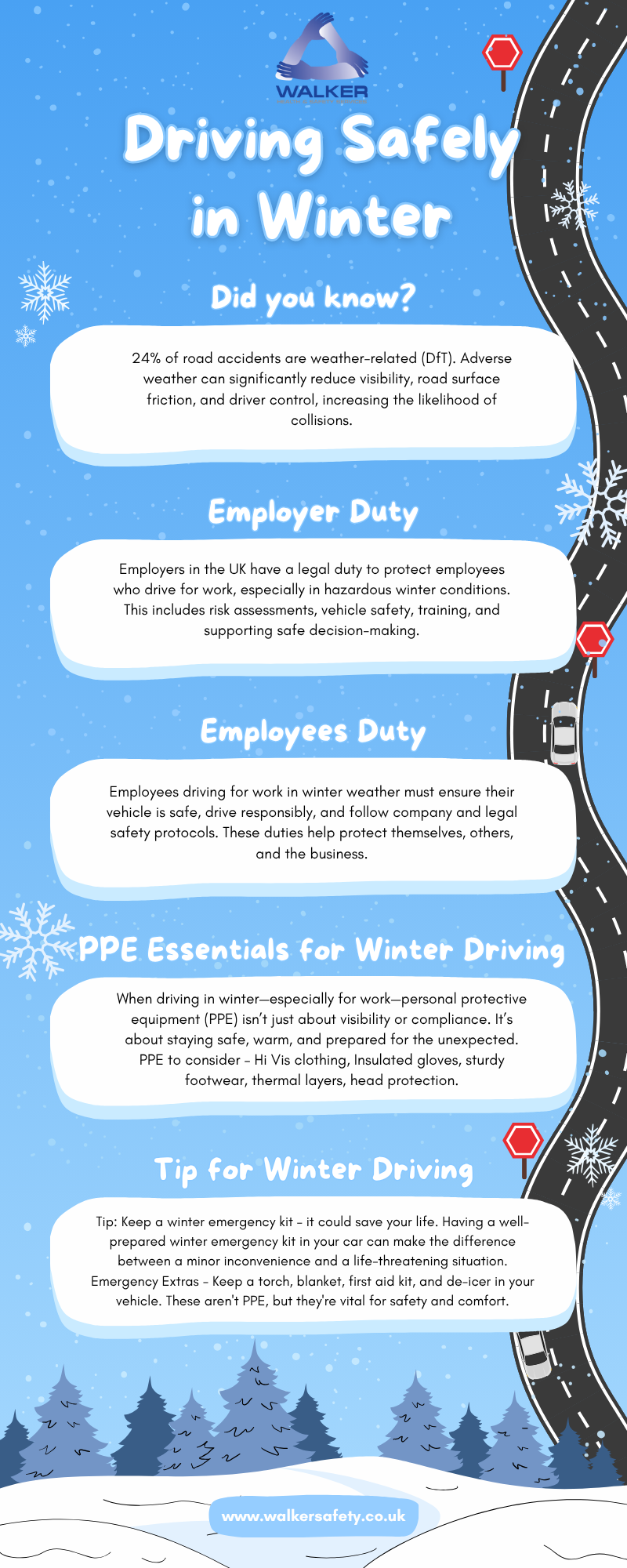
Driving Responsibly
Employees must adapt their driving to winter hazards:
These behaviours align with health and safety law, which applies to work-related driving just as it does on-site.
Legal and Employer Expectations
Under UK law and employer policies, employees must:
Employers are required to manage road safety risks, but employees play a key role in executing those plans.
Emergency Preparedness
Employees should carry a winter emergency kit, especially for longer journeys:
This is particularly important for lone workers or those driving in rural areas.
When Not to Drive
If conditions are too dangerous, employees should:
Employers must support safe decision-making and not penalize employees for refusing to drive in hazardous conditions
Winter arrives in earnest in November, bringing additional risks and heavier operational pressures. It’s also a fitting time to reflect on workplace safety culture and legacy.
Key Focus Areas and Relevant UK Campaigns:
– Winter Driving Risks: Icy roads and shortened daylight demand fleet checks, safe driving guidance, and realistic scheduling.
– Fire Safety Alertness: With increased heating use, revisiting fire risk assessments and conducting evacuation drills is key.
– Slips, Trips & Falls: Frost and ice can cause serious incidents. Gritting plans, clear signage, and robust housekeeping are essential.
2. Safety Culture Reflection
– Health and Safety at Work Act Anniversary – 31 July (celebrated throughout 2025): 2024 marked the 50th anniversary of the landmark Health and Safety at Work Act 1974—foundational legislation that revolutionised workplace safety in the UK (https://www.britsafe.org/safety-management/2024/a-golden-era-of-safety-50-years-of-the-health-and-safety-at-work-act).
3. Staff Wellbeing
Shorter days can lower morale and productivity. Encourage breaks, organise social connection opportunities, and highlight wellbeing support to prevent fatigue-related risks.
4. Environmental Efficiency
– Energy Usage Management: As heating and lighting needs rise, encourage efficient usage, implement switch-off policies, and ensure systems are maintained.
– Managing Year-End Waste: Increased production and stock turnover mean more waste—review safe storage, disposal, and recycling channels.
Why This Matters
November is a tipping point month—your blog can guide businesses in preparing for winter hazards, reinforcing safety culture with legislative context, and maintaining environmental and employee wellbeing focus.
Contact us to discuss your health and safety requirements.
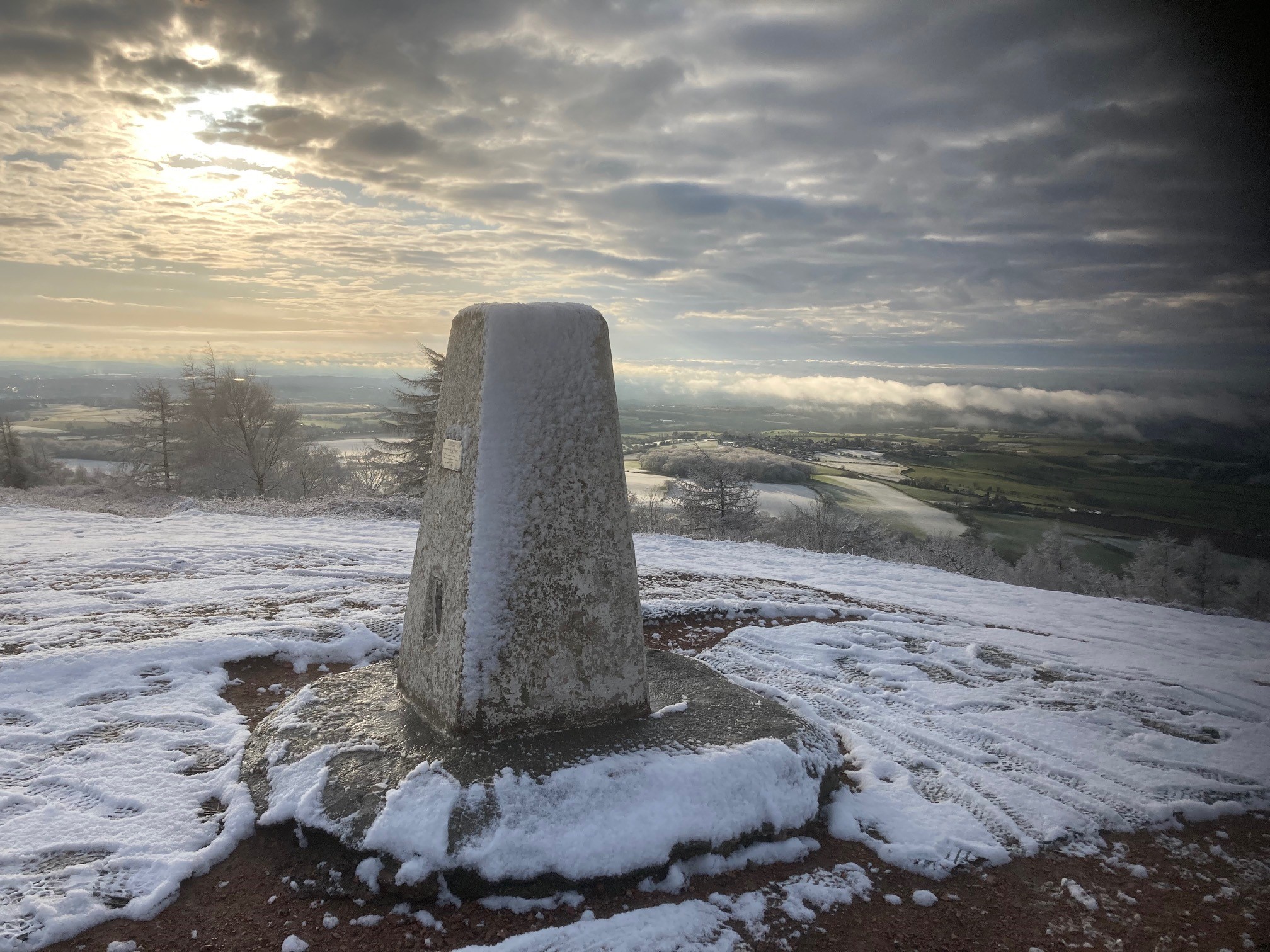
Photo Credit. Emma Woodhouse. The Wrekin!
Preparing for winter
To prepare for inclement weather, a winter plan should be put together with an associated risk assessment. This should be carried out well in advance, and revisited and revised throughout the cold period.
The winter plan will be part of the suite of contingency plans already in place that outline what could happen in worst-case scenarios, and how these risks are mitigated and managed. For example, how would the business fare if power supplies went down?
To make sure everyone understands what is expected of them, and to ensure the plan is as streamlined as possible, it should be completed alongside other areas of the business, eg HR, IT and the communications team.
As part of any planning process, include a review of how the plan fared last year, as well as the year before, so that new approaches can be adopted where processes were less than ideal.
Some areas that could be addressed as part of winter planning are outlined below.
Communication and remote working
Staff need to know what is expected of them when bad weather strikes, as well as what they can expect from the organisation. In some respects, the widespread introduction of remote working following Covid-19 may have improved the organisation’s ability to adapt to short-term consequences of being unable to attend work. Many members of staff will now be set up to work from home, and if hybrid working has been introduced into the organisation, this may help reduce disruption.
However, staff will still need clear policies on what is appropriate, so work with HR to integrate flexible working policies into the winter plan so that employees understand what to do in the event of bad weather or other winter-related disruptions, such as emergency childcare needs.
Facilities staff will need to be familiar with what needs to happen if staff should not come into work and any building closures should be addressed in a consistent manner.
Communicating with staff is key in all these instances, so make sure that the communication plan is clear, approved, and aligned with communication from other departments. Also ensure that managers are on board and understand what is required.
Preventive maintenance
Bad weather and high winds can expose any building flaws, especially in areas such as roofs or windows. Before winter comes, carry out a condition survey to identify any potential problems, and prioritise them for repair.
Similarly, regularly inspect heating systems and any other plant required for emergencies, such as backup generators. Proactive maintenance and regular inspections will help reduce the chance of failure when these bits of kit are most needed. Consider setting additional “winter” KPIs to help track and monitor those tasks that need to be given higher priority during this time.
Ventilation can help to reduce the spread of winter viruses. Options such as opening windows may become less appealing as it turns colder, and so mechanical ventilation will be relied upon. Again, preventive maintenance will help ensure that all systems are functioning well.
Slips and trips
Snow and ice are two obvious winter problems that can be a hindrance to any business. Make sure that supplies of grit are fully stocked, and that weather warnings are regularly checked so that the grit is used when needed. Staff employed to spread grit need proper personal protective equipment (PPE) as well as a map of where to grit, and priority areas. Keep records of where and when gritting takes place and fully train staff.
Do not forget inside the building too — staff bringing snow and ice in on their shoes can create slippery surfaces, so consider adding extra mats at the front doors to help keep the building clean and to absorb any extra wetness.
Also remember that slips and trips are not just isolated to times when snow falls. Darker mornings and evenings can cause more accidents, as can autumnal leaf fall. As part of maintenance checks, ensure external lighting is adequate and that entrances and pathways are kept clear of leaf litter and debris.
Staff working outdoors
As part of the maintenance team there might be people who are regularly working outdoors. Although minimum working temperatures do not apply for these workers, there is, however, still a duty of care to ensure that people are not working in unsafe conditions. This could mean that managers need to look at rotas to avoid staff working outside in the cold for long periods of time, as well as making sure there are adequate facilities for people to warm up and take a break. Additional PPE to account for the weather can also be appropriate, eg having good waterproofs.
Equip fleet vehicles
Make sure fleet vehicles (including grey fleet vehicles) are prepared for wintery conditions. This means making a considered decision as to whether winter tyres are necessary, as well as asking staff to undertake some basic checks on weather and road conditions before deciding to drive. It is also a good idea to put together a car “winter pack”, including a blanket, in-car phone charger and snow shovel. Staff can supplement this with personal items that could include warm clothing and food.
Managing sickness
Along with bad weather comes the dreaded winter flu. Managing sickness will be important. Facilities and Health and Safety managers can play a significant role in reducing the impact of staff illness spreading. For example, by stocking up on soap and alcohol gels and working to promote “hands, face, space” messaging and other good behaviours to reduce the spread infections.
Furthermore, don’t forget that winter doesn’t always mean catching a cold. For some, it can also bring about the onset of Seasonal Affective Disorder (SAD) as well as a propensity for less exercise and a change in diet. The onset of winter can make any pre-existing mental health conditions worse. Keep this in mind; perhaps renew or re-launch any wellness campaigns or promote any mental
support that is offered by the business.
Summary
In short, plan ahead. Make sure that a winter plan is in place, any maintenance is carried out and that the business is ready should the worst happen. If bad weather does strike, then remember to review how it went afterwards and implement any changes that might be necessary.
Contact us if you require further information.
 Making sure your business is a safe place for people to work, shop, or visit is essential. Whether you’re a public-facing high-street retailer, a factory with a growing workforce or your clients are visiting your offices in an industrial estate, there are many hazards you should be looking out for.
Slip and trip accidents increase during the Autumn and Winter season for a number of reasons: there is less daylight, leaves fall onto paths and become wet and slippery and cold weather spells cause ice and snow to build up on paths. There are effective actions that you can take to reduce the risk of a slip or trip. Regardless of the size of your site, always ensure that regularly used walkways are promptly tackled.
Carry out a risk assessment – Under the Management of Health and Safety at Work Regulations 1999, a risk assessment is a legal requirement that involves identifying sensible measures to control hazards if you’re an employer, your work activity is mentioned in the regulations, or your work poses a risk to others.
Identify hazards outside your business – These are mainly the result of wet and icy weather. Places where hazards could occur include Company car park and its adjoining road, Pavement or pathways etc
Identify hazards inside your business – These can mainly be the result of darker days and colder temperatures. Places where hazards could happen include the entrance areas of your business, dark warehouses, unlit corridors or stairwells for example.
Is there is enough lighting around your workplace for you and your workers to be able to see and avoid hazards that might be on the ground? The easiest way to find out is to ask your employees.
Fallen leaves that become wet or have started to decay can create slip risks in two ways, they hide any hazard that may be on the path or they themselves create a slip risk.
Put in place a procedure for removing leaves at regular intervals; you might even consider removing the offending bushes or trees altogether.
In dealing with rainwater:
The most common method used to de-ice floors is gritting as it is relatively cheap, quick to apply and easy to spread. Rock salt (plain and treated) is the most commonly used ‘grit’. It is the substance used on public roads by the highways authority.
Salt can stop ice forming and cause existing ice or snow to melt. It is most effective when it is ground down, but this will take far longer on pedestrian areas than on roads.
Gritting should be carried out when frost, ice or snow is forecast or when walkways are likely to be damp or wet and the floor temperatures are at, or below freezing. The best times are early in evening before the frost settles and/or early in the morning before employees arrive. Salt doesn’t work instantly; it needs sufficient time to dissolve into the moisture on the floor.
If you grit when it is raining heavily the salt will be washed away, causing a problem if the rain then turns to snow. Compacted snow, which turns to ice, is difficult to treat effectively with grit. Be aware that ‘dawn frost’ can occur on dry surfaces, when early morning dew forms and freezes on impact with the cold surface. It can be difficult to predict when or where this condition will occur.
Contact us if you require further information.

Winter’s coming: are you prepared?
This autumn there have already been incidents of severe flooding, hurricanes and even snow. Although, it is tempting to hope that such extreme weather is just a one-off, our changing climate means that we are likely to experience more severe weather, not less.
The Climate Change Committee has warned that “future UK winter weather may be dominated more often by weather patterns associated with wetter, wilder and windier winter weather”. And although bitingly cold winters are not a key part of the predictions, variability is, meaning that businesses would be wise to properly prepare for winter regardless of how cold, or snowy, it might be. The cold, icy conditions experienced during the winter of 2018/19 — which led to temperatures plummeting to -14°C in the Cairngorms in Scotland and bringing some cities to a halt — were estimated to have cost the UK economy £1 million for every day of disruption.
Preparing for winter
To prepare for inclement weather, a winter plan should be put together with an associated risk assessment. This should be carried out well in advance, and revisited and revised throughout the cold period. The winter plan will be part of the suite of contingency plans already in place that outline what could happen in worst-case scenarios, and how these risks are mitigated and managed. For example, how would the business fare if power supplies went down?
Due to the impact of Covid-19 and the resulting lockdown, last year’s winter plan was likely to have been radically different to those preceding it. Some aspects may be still relevant; others may need adapting based on the current and anticipated measures for Winter 2021/22. As part of any planning process, include a review of how the plan fared last year, as well as the year before, so that new approaches can be adopted where processes were less than ideal.
Some areas that could be addressed as part of winter planning are outlined below.
Preventive maintenance
Bad weather and high winds can expose any building flaws, especially in areas such as roofs or windows. Before winter comes, carry out a condition survey to identify any potential problems, and prioritise them for repair.
Similarly, regularly inspect heating systems and any other plant required for emergencies, such as back-up generators. Proactive maintenance and regular inspections will help reduce the chance of failure when these bits of kit are most needed. Consider setting additional “winter” KPIs to help track and monitor those tasks that need to be given higher priority during this time.
Proper ventilation will also be crucial this winter to help reduce the spread of Covid-19. Options such as opening windows may become less appealing as it turns colder, and so mechanical ventilation will be relied upon. Again, preventive maintenance will help ensure that all systems are functioning well.
Slips and trips
Snow and ice are two obvious winter problems that can be a hindrance to any business. Make sure that supplies of grit are fully stocked, and that weather warnings are regularly checked so that the grit is used when needed. Staff employed to spread grit need proper personal protective equipment (PPE) as well as a map of where to grit, and priority areas. Keep records of where and when gritting takes place and fully train staff. Also ensure that any gritting is carried out in a Covid secure manner, for example, by providing individual PPE.
Do not forget inside the building too — staff bringing snow and ice in on their shoes can create slippery surfaces, so consider adding extra mats at the front doors to help keep the building clean and to absorb any extra wetness.
Remember that slips and trips are not just isolated to times when snow falls. Darker mornings and evenings can cause more accidents, as can autumnal leaf fall. As part of maintenance checks, ensure external lighting is adequate and that entrances and pathways are kept clear of leaf litter and debris.
Staff working outdoors
As part of the maintenance team there might be people who are regularly working outdoors. Although minimum working temperatures do not apply for these workers, there is, however, still a duty of care to ensure that people are not working in unsafe conditions. This could mean that managers need to look at rotas to avoid staff working outside in the cold for long periods of time, as well as making sure there are adequate facilities for people to warm up and take a break. The availability of facilities is especially critical if breaks need to be staggered due to Covid-19, or if the usual facilities have changed. Additional PPE to account for the weather can also be appropriate — for example, having good waterproofs.
Managing sickness
Along with bad weather comes the dreaded winter flu. This year, seasonal flu may also coincide with another wave of Covid-19 infections meaning that managing sickness will be more important than ever. Health and Safety representative and managers can play an important, if not visible, role in reducing the impact of staff illness spreading. For example, by stocking up on soap and alcohol gels and working to promote “hands, face, space” messaging and other good behaviours to reduce the spread infections.
Winter doesn’t always mean catching a cold. For some, it can also bring about the onset of Seasonal Affective Disorder (SAD) as well as a propensity for less exercise and a change in diet. The impact that Covid-19 has had on mental health is well documented, and the onset of winter can make any pre-existing condition worse. Keep this in mind; perhaps renew or re-launch any wellness campaigns or promote any mental health support that is offered by the business.
In short, plan ahead. Make sure that a winter plan is in place, any maintenance is carried out and that the business is ready should the worst happen. If bad weather does strike, then remember to review how it went afterwards and implement any changes that might be necessary.
Contact us for further information or advice.