Chemical safety is one of the most important responsibilities in any workplace. Under the Control of Substances Hazardous to Health Regulations (COSHH), employers must assess, control, and communicate the risks associated with hazardous substances. Good chemical management prevents illness, injuries, fires, and environmental harm — and it starts with clear, consistent hazard communication.
The UK follows the Globally Harmonised System (GHS) for chemical classification and labelling. This means SDS documents follow a standardised format — but workers must know how to interpret them.
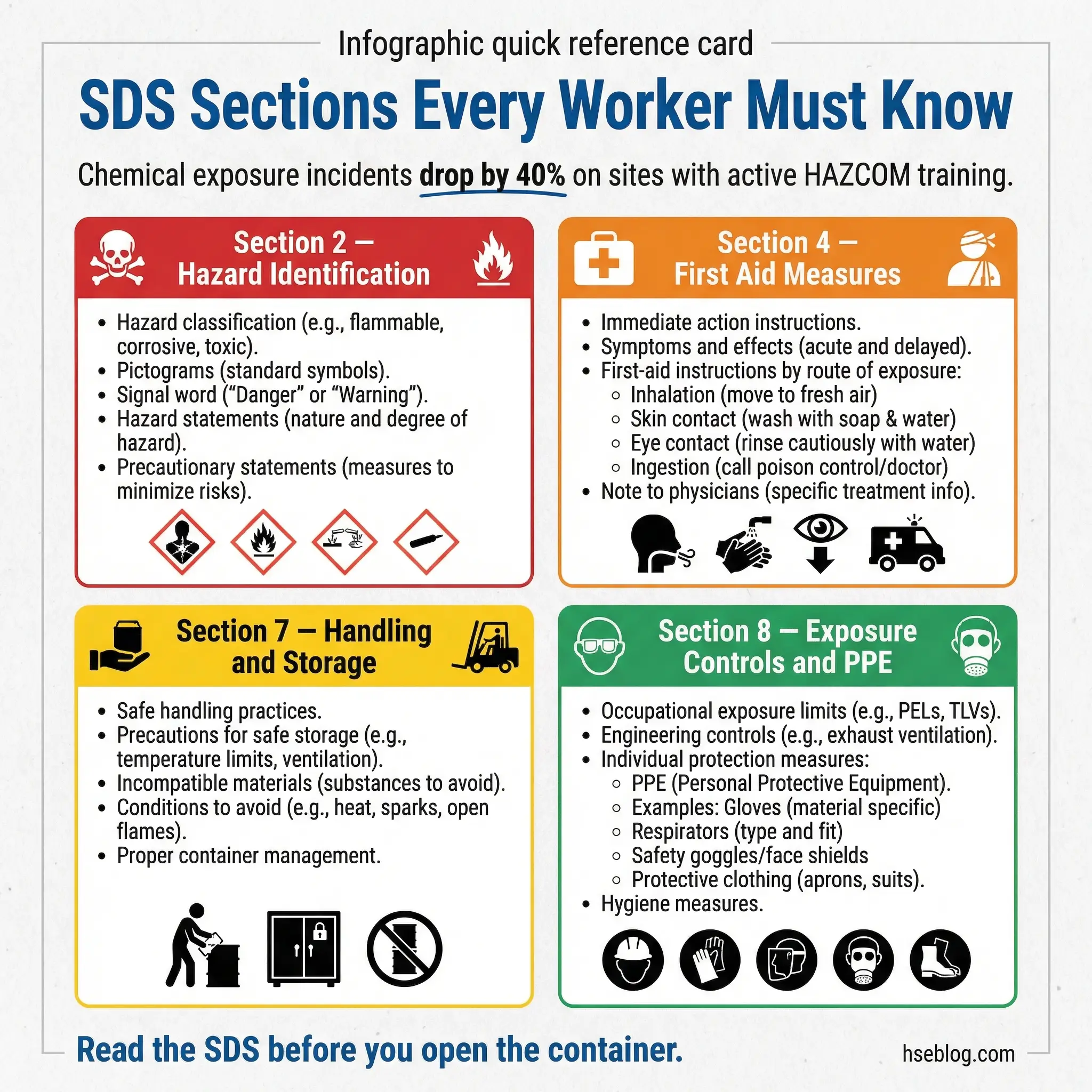
Your infographic highlights the four SDS sections every worker should know:
| Section | Purpose | Key Points |
|---|---|---|
| Section 2 – Hazard Identification | Identifies chemical hazards. | GHS pictograms, signal words, hazard statements. |
| Section 4 – First Aid Measures | What to do if exposure occurs. | First‑aid steps for inhalation, skin, eyes, ingestion. |
| Section 7 – Handling & Storage | Safe use and storage. | Incompatible substances, temperature limits, container rules. |
| Section 8 – Exposure Controls & PPE | Protecting workers. | Ventilation, PPE, exposure limits, engineering controls. |
A COSHH briefing works best when you use real SDS documents from your site, not generic examples. Pick a chemical your team actually uses and walk through:
Workers engage far more when the product is familiar.
Every worker must know:
This is a legal requirement under COSHH — not optional.
GHS labels must be understood, not just recognised. Training should cover:
Ask workers to explain labels back to you — it reinforces learning.
Incorrect storage causes fires, toxic gas release, and violent reactions. Key COSHH reminders:
Regular storage audits prevent dangerous combinations.
Workers must know:
Practical drills build competence far better than written instructions.
Under COSHH, employers must:
These duties apply to all workplaces, from warehouses to workshops to offices using cleaning chemicals.
Chemical safety depends on knowledge, vigilance, and communication. When workers understand SDS sections, respect labels, and follow COSHH controls, incidents drop dramatically — and everyone goes home safe.
Contact us for further information.