October marks Menopause Awareness Month, a time to spotlight the experiences of millions of women across the UK and to push for better support, understanding, and workplace inclusion. Despite rising awareness, the data shows that menopause remains one of the most under‑recognised health and equality issues affecting the UK workforce.
Below is a clear, evidence‑based look at the current picture — and why October matters more than ever.
These numbers alone show why menopause is not a niche issue — it is a major public health and workforce consideration.
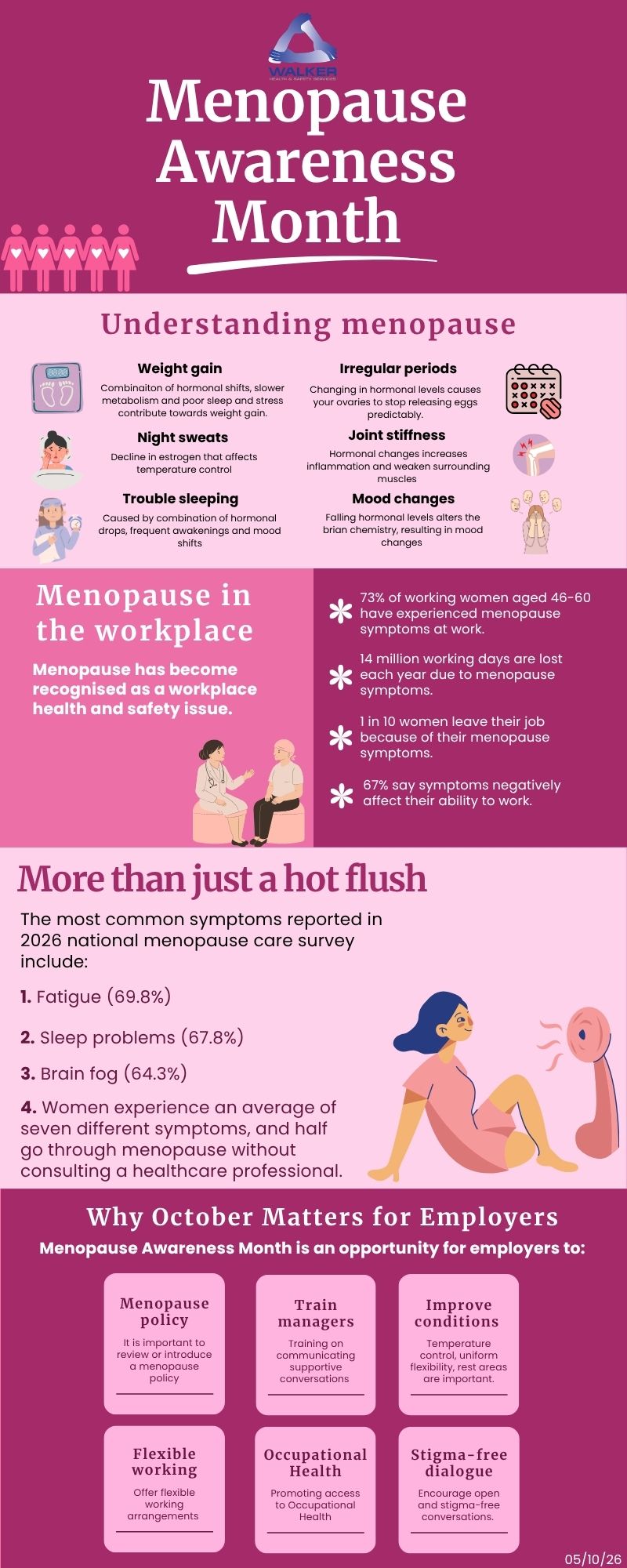
Menopause is increasingly recognised as a workplace health and safety issue, especially as women aged 45–54 are now the fastest‑growing demographic in the UK workforce .
Key workplace statistics:
Despite this:
This gap is exactly why Menopause Awareness Month is essential.
Recent national surveys reveal significant gaps in menopause care:
Meanwhile, demand for treatment is rising:
This shows progress — but also inequality.
Menopause Awareness Month isn’t just about raising awareness — it’s about changing outcomes. The statistics show a clear picture: millions of women are affected, many feel unsupported, and the impact on wellbeing, careers, and the economy is significant.
By using October to educate, support, and act, the UK can move closer to a future where menopause is understood, accommodated, and never a barrier to health or career progression.
If you have any queries, please contact us.
Guest Blogging
If you feel that you could contribute to this blog then please feel free to send me a proposal of your guest blogging ideas and we can discuss these further info@walkersafety.co.uk . Please note any proposals must be of benefit to my readers from individuals with knowledge of their subject matter.
Menopause Awareness Month (October): Why the UK Must Keep the Conversation Going