

Social Distancing in Emergencies

Actions to Take in the Event of a Coronavirus Outbreak at Work
Official Government guidance for England recommends that, as part of the risk management, employers should ensure they have an up-to-date plan in the event of an outbreak.
Guidance from the British Standards Institution recommends that organisations “should establish and communicate processes to manage suspected and confirmed cases of Covid-19”.
In the event of an employee (or other stakeholder) becoming unwell, organisations should ensure they have a procedure for immediate action that:
• requires any person becoming unwell to be treated as a potential Covid-19 case
• enables the person that is unwell to be isolated while awaiting first-aid assistance, transport home or assistance from medical professionals
• provides appropriate personal protective equipment to first-aid personnel and a face mask to the person who is unwell (taking account of any respiratory issues)
• ensures first-aid personnel are aware of procedures to follow as detailed by the Health and Safety Executive
• enables the person to return home (where medical assistance is not required) avoiding the use of public transport (eg collection by family member)
• encourages the staff member to seek a Covid-19 test and then inform the employer of the result of that test.
Where there is a known or suspected case, the organisation should put into action the necessary cleaning requirements as described in official Government/home nation guidance, including disposal of items of waste.
The BSI guide recommends that where a suspected or confirmed case is known, employers should “establish if an affected worker has been in close contact with other workers (eg performing work activities without physical distancing in a team or pair)”.
This will fall in line with requirements under the various UK test and trace regimes, which should form part of any process and planning for suspected or confirmed cases.
The planning should also include a process to determine if the case (when confirmed) requires reporting under RIDDOR as a work-related exposure.
If there is more than one case of Covid-19 associated with a workplace, employers should contact their local health protection team to report the suspected outbreak.
Remember to look at the previous blogs for advice. They may be of benefit. Please feel free to forward our blogs onto your contacts, friends and family.
Remember to stay safe and be compliant!
Contact us should you wish to find out more.
Spot inspections by HSE to ensure workplaces are Covid-secure
The Health and Safety Executive (HSE) is currently carrying out spot inspections in cities and towns where there are coronavirus outbreaks, to check that businesses are Covid-secure.
An inspection process involves checking that businesses are aware of the guidance, and advising where necessary on improvements needed to ensure the workplace is Covid-secure. Most recently, HSE conducted spot inspections on businesses in Bradford.
Working with other public local and national government authorities, inspectors are currently out and about visiting businesses, putting employers on the spot and checking that they are complying with the latest guidance.
Here are some practical steps that businesses can take to be Covid-secure before spot inspections are carried out by the HSE to ensure workplaces are Covid-secure:
HSE has been utilising a number of different ways to gather intelligence and reach out to businesses with a combination of site visits, phone calls and through collection of supporting visual evidence.
Some of the most common issues that HSE and local authority inspectors are finding, across the country, include failing to:
You have an absolute legal duty to monitor, maintain and review all matters and arrangements of health and safety. By adhering to the Audit requirement and process an Organisation will be able to demonstrate that health and safety is pro-actively managed in accordance with legislative, Insurers and Fire Department requirements.
An Audit will also act as a suitable defence in a court of law, should either Civil or Criminal proceedings be instigated.
Contact us for further information.
Keep Safe!
PPE
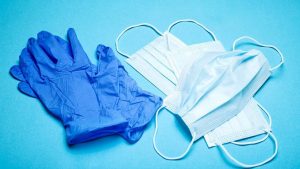
Face coverings have become mandatory in some shops and supermarkets in England. In terms of the law, in England, people are required to wear face coverings:
For members of the public, from 8 August the places where you will have to wear a face covering will be expanded to include:
However, people with mental or physical illnesses or disabilities are exempt from the requirements — if wearing a face covering makes it difficult to breathe for example, such as in the case of respiratory conditions like asthma.
Asthma and Face Coverings – Understanding the Exemptions! A downloadable exemption card has been produced for people to show on their phones or elsewhere to explain why they’re not wearing a mask. However, people are not obliged by law to show the card if they are challenged on face masks.
Coronavirus (COVID-19) usually spreads by droplets from coughs, sneezes and speaking. These droplets can also be picked up from surfaces, if you touch a surface and then your face without washing your hands first. This is why social distancing, regular hand hygiene, and covering coughs and sneezes is so important in controlling the spread of the virus.
The best available scientific evidence is that, when used correctly, wearing a face covering may reduce the spread of coronavirus droplets in certain circumstances, helping to protect others.
Face coverings are mainly intended to protect others, not the wearer, from coronavirus (COVID-19) they are not a replacement for social distancing and regular hand washing. It is important to follow all the other government advice on coronavirus (COVID-19) including staying safe outside your home. If you have recent onset of any of the most important symptoms of coronavirus (COVID-19):
you and your household must isolate at home: wearing a face covering does not change this.
A face covering should:
When wearing a face covering you should:
When removing a face covering:
Contact us for further information.
Social Distancing in Emergencies
The UK Government’s guidance for working safely during Covid-19 states that “in an emergency, for example an accident or fire, people do not have to stay 2m apart if it would be unsafe”.
Covid-19 secure guidelines have the potential to change the fire risk profile of an organisation and the potential issues of workplace configurations during the pandemic will need to be taken into account from a fire safety perspective.
As there is a potential for change to the fire risk profile, organisations will need to review the fire risk assessment to ensure it identifies such changes and analyse the risk from the changes.
Social Distancing in Emergencies. Examples of such changes are:
The Fire Emergency Plan for the premises will need to be reviewed as part of the fire risk assessment review. Key issues in relation to social distancing are evacuation through means of escape that prevent social distancing, the evacuation of those who require assistance and the assembly point.
It is recognised that social distancing may not be possible during an evacuation due to the configuration of the means of escape. Organisations should not introduce any measures to mitigate this that make evacuation unsafe, for example by delaying evacuation.
A particular challenge may be social distancing where assistance is provided to those who require support to evacuate safely. Any Personal Emergency Egress Plan/s (PEEP) will need to be reviewed. In doing so, the organisation should take into account current official fire safety guidance and the UK Government Covid-19 secure guidelines in relation to those with “protected characteristics”.
Where close contact is necessary, immediate hygiene measures should be adopted for all those involved following the evacuation.
Assembly points
Assembly points assist in the control of occupants who have evacuated as well as enabling on-going communication and roll-call procedures, for example. The organisation should review the use of the assembly point and determine if social distancing can be maintained or whether alternative measures are required.
This could include the use of additional assembly points, marking the ground for social distancing, controlling dispersal, etc.
If you would like to have your fire risk assessment reviewed or have a new one created please contact us.
Stay Safe!

Online training
Since the UK lockdown due to COVID-19, classroom-based training has largely halted. Delegates sit indoors in very close proximity for long periods of time. There are additional risks associated with using public transport and mingling at break times. In short, classrooms can be petri dishes. Online training avoids these risks and, according to our beloved principles of prevention, should be considered before options such as distancing or barriers. It is also questionable how many delegates could fit into a venue if they must be physically distant.
There are subjects for which face-to-face training is unavoidable. If online training is an option, it is worth considering the benefits and potential pitfalls.
In the current climate of home working and skeleton staff in the workplace due to COVID-19, we look at the benefits of online training and the advantages that are offered. These include:
Delivering training online undoubtedly has potential pitfalls such as being let down by, or being unable to use, the technology. The pitfalls can be avoided or managed with some simple steps.
Many organisations have little option but to consider online training. Rather than being an undesirable substitute, this approach offers tremendous benefits and could become the new normal regardless of how COVID-19 plays out.
Getting the best from it requires an initial investment of time and effort. As with most things in life, the more you put in, the more you’ll get out.
Contact us for your training needs.
Keep Safe!