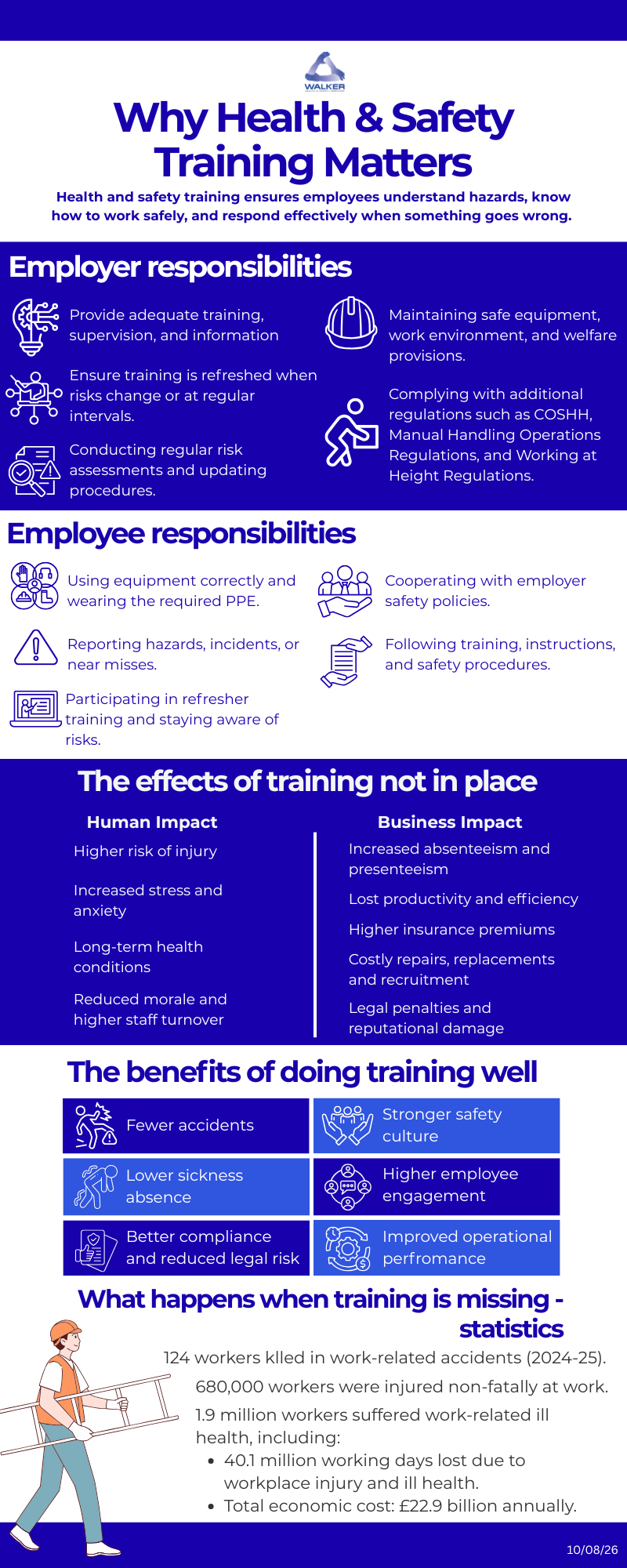
Health and safety training ensures employees understand hazards, know how to work safely, and can respond effectively when something goes wrong. It’s the foundation of a safe workplace and a legal obligation under the Health and Safety at Work etc. Act 1974, which requires employers to provide “information, instruction, training and supervision” to protect staff.
Training is also proven to work. Over the past 50 years, systematic safety training has contributed to an 85% reduction in workplace fatalities in the UK.
Employers have clear legal duties, including:
Failure to meet these duties can result in unlimited fines, prohibition notices, and even imprisonment under the Corporate Manslaughter Act 2007.
Employees also play a vital role in maintaining safety. Their responsibilities include:
A trained employee is more confident, more productive, and far less likely to be involved in an incident.
The consequences of inadequate training are both human and financial:
In the UK alone, employers lose £42–£45 billion each year due to absenteeism, presenteeism, and turnover — much of which is preventable through proper training.
Effective health and safety training leads to:
Health and safety training isn’t just a box-ticking exercise — it’s a strategic investment that protects people, strengthens businesses, and ensures legal compliance. The statistics make one thing clear: training saves lives, reduces costs, and builds better workplaces.
Contact us for further information.
Guest Blogging
If you feel that you could contribute to this blog then please feel free to send me a proposal of your guest blogging ideas and we can discuss these further info@walkersafety.co.uk . Please note any proposals must be of benefit to my readers from individuals with knowledge of their subject matter.
Guest Blog – David Tilsley-Curtis of 3JB Ltd
 Helping Engineering Managers, Safety Managers and Duty Holders ensure work at height equipment is inspected, maintained and used safely in compliance with PUWER and the Work at Height Regulations.
What do PUWER and the Work at Height Regulations tell us?
Regulation 6 of the Provision and Use of Work Equipment Regulations 1998 (PUWER) places a duty on employers and those in control of work equipment to ensure that equipment exposed to conditions causing deterioration is inspected by a competent person at suitable intervals.
In addition, the Work at Height Regulations 2005 (WAHR) require that equipment used for working at height is suitable for its intended purpose, maintained in a safe condition and inspected at appropriate intervals.
Regulation 12 specifically requires that must be rigorously inspected by a competent person on a regular basis, especially after being exposed to conditions liable to cause deterioration which could result in dangerous situations is inspected by a competent person.
Neither PUWER nor WAHR provides a precise definition of a “competent person”, leaving employers responsible for ensuring the individual carrying out inspections has the appropriate knowledge, training and experience.
What is the purpose of a Work at Height Equipment Inspection?
The purpose of inspecting work at height equipment is to confirm that it remains safe for continued use, that deterioration can be identified before it presents a risk, and that appropriate remedial action is taken where defects are found.
Inspection is intended to determine whether equipment can continue to be used safely, rather than confirming that it is always being used safely. Safe use depends on many other factors, including planning, supervision, user competence and adherence to safe systems of work.
Equipment commonly requiring inspection includes:
• Podium steps
• Mobile access towers
• Portable Ladders and stepladders
• Mobile platforms /gantries
• Fixed Ladders
• Edge Handrailing
• Safety harnesses and lanyards
• Foxed access platforms and walkways
Regular inspections form one part of an effective work at height management system alongside maintenance, operator training, pre-use checks and suitable risk assessments.
How do you identify a Competent Person to carry out Work at Height Equipment Inspections?
Both PUWER and WAHR require inspections to be completed by a person with sufficient knowledge and experience to recognise defects, assess their significance and determine appropriate action.
For work at height equipment, this competence typically includes knowledge of:
• The manufacturer’s intended use, inspection criteria and maintenance requirements.
• Relevant legislation including PUWER and the Work at Height Regulations.
• Current industry guidance, British Standards and HSE publications relating to work at height equipment.
• Inspection methods appropriate to the type of equipment being examined.
• Risk assessment principles to determine whether defects require immediate withdrawal from service or controlled continued use.
Evidence of competence may include recognised qualifications, manufacturer training, IPAF, PASMA or Ladder Association training (where appropriate), engineering qualifications and documented experience in designing and certifying similar equipment.
Can inspections be carried out in-house?
Yes.
Many organisations successfully carry out inspections using competent in-house personnel, provided they have:
• Experience with the equipment being inspected.
• Knowledge of deterioration mechanisms and common failure points.
• Understanding of current legal requirements and industry best practice.
• Knowledge of the BS or EN standard appropriate to the equipment being inspected.
• The ability to identify defects and recommend appropriate corrective actions.
Where sufficient competence is not available internally, employers should appoint an independent third-party inspection provider with demonstrable expertise.
Although inspections may be outsourced, the legal duty to ensure inspections are completed remains with the employer or person in control of the equipment. This responsibility cannot be transferred.
What does “Necessary Experience” mean?
For straightforward equipment such as ladders or podium steps, experienced supervisors or maintenance personnel may possess sufficient knowledge to complete inspections, provided they understand the inspection criteria and manufacturer recommendations.
More complex equipment—including MEWPs, fall arrest systems, suspended access equipment or anchor points—often requires specialist knowledge and formal training and will most often come under the LOLER requirements.
Necessary experience includes understanding:
• How the equipment functions.
• Typical wear, fatigue and deterioration mechanisms.
• Manufacturer inspection requirements.
• Relevant British Standards and HSE guidance.
• Safe operating limitations.
• The consequences of defects or misuse.
This experience enables inspectors to distinguish between cosmetic issues, maintenance requirements and defects that make equipment unsafe.
Determining Inspection Requirements
The Health and Safety Executive recognises that determining what should be inspected, how inspections should be carried out, and how often inspections are required demands a different level of competence from carrying out the inspection itself.
Appointed Person for Determining Inspection Requirements
This individual should understand:
• Which equipment requires formal inspection.
• What each inspection should include.
• Whether functional testing is necessary.
• Inspection intervals based on manufacturer recommendations, frequency of use and operating conditions.
• Applicable legal and industry requirements.
Appointed Person for Carrying Out Inspections
The individual carrying out inspections should understand:
• The construction and operation of the equipment.
• Inspection techniques appropriate for that equipment.
• Common defects and deterioration mechanisms.
• Acceptance and rejection criteria.
• Appropriate reporting procedures.
• When equipment must be withdrawn from service immediately.
Inspection findings should be clearly documented, with defects prioritised according to risk and suitable corrective actions recommended.
How do I check the competence of Third-Party Inspection Companies?
Before appointing an external inspection provider, employers should verify that inspectors possess appropriate competence for the equipment being inspected.
Areas to consider include:
Relevant Technical Knowledge
Inspectors should have demonstrable engineering or technical competence relating to work at height equipment.
Examples include:
• Engineering qualifications
• Engineering knowledge of the design standards
• PASMA experience
• Ladder experience
• Manufacturer-specific inspection training
• Experience inspecting similar equipment
Equipment-Specific Experience
Inspectors should understand not only the equipment itself but also how it is used within your workplace, including environmental factors that may affect deterioration.
Health and Safety Competence
Inspectors should possess appropriate health and safety knowledge through recognised qualifications or significant practical experience.
Why is it important to verify inspector competence?
Both PUWER and the Work at Height Regulations require inspections to be carried out by competent persons.
Employers therefore have a legal duty to ensure that anyone carrying out inspections has the necessary training, knowledge and experience before inspections begin.
For in-house inspectors, competence can normally be demonstrated through:
• Training records.
• Qualifications.
• Experience.
• Job role descriptions.
• Supervised inspection history.
For external providers, competence should be assessed as part of supplier approval and procurement processes.
Simply requesting copies of qualifications is not sufficient. Employers should ensure qualifications remain current, are relevant to the equipment being inspected and are supported by appropriate practical experience.
Failure to verify competence could expose an organisation to enforcement action, increased liability and unnecessary risk should equipment fail or an accident occur.
Supporting Compliance
Effective inspection programmes help organisations demonstrate compliance with both PUWER and the Work at Height Regulations while reducing the risk of equipment failure and falls from height.
Whether inspections are completed internally or by an external specialist, employers should ensure inspections are planned, documented, risk-based and carried out by genuinely competent persons.
Professional inspection providers can also assist with inspection scheduling, written reports, defect prioritisation, compliance audits and training to help organisations maintain safe work at height equipment throughout its service life.
If you have any questions, contact us or Dave at 3JB Ltd.
Guest Blogging
If you feel that you could contribute to this blog then please feel free to send me a proposal of your guest blogging ideas and we can discuss these further info@walkersafety.co.uk . Please note any proposals must be of benefit to my readers from individuals with knowledge of their subject matter.
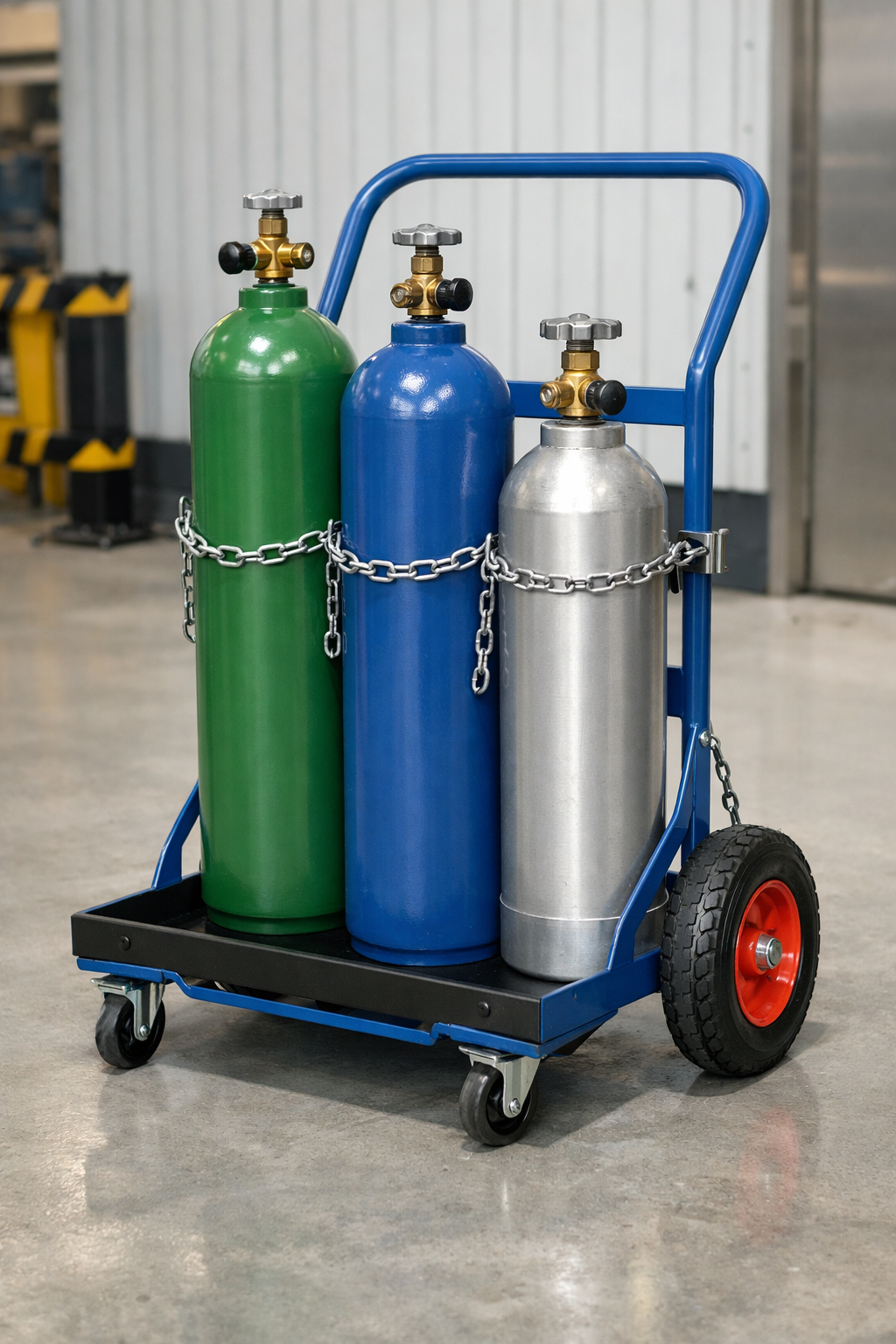
In garages, workshops and factory environments, welding gas cylinders are part of everyday operations — quietly sitting behind benches, beside welding bays or stored in designated gas cages. They’re easy to overlook because they’re familiar. But with updated UK guidance and increased inspection focus, 2026 is the perfect time to take a fresh look at the hoses, regulators and fittings attached to your welding gas cylinders.
Because yes, the expectations have tightened, and yes, replacing ageing accessories is often safer and more compliant than relying on extra checks.
Regulators used for oxygen, acetylene, argon mixes and CO₂ must now meet BS EN ISO 2503, be clearly date‑stamped, and show no signs of corrosion or damage. If your regulator is out of date or unlabelled, it will not pass inspection.
Welding gas hoses must comply with BS EN 559, and inspectors are increasingly favouring flexible stainless hoses (BS EN ISO 10380) in high‑risk or high‑movement areas due to their durability and heat resistance.
Unlike static LPG setups, garages and factories have:
This is why guidance now emphasises proactive replacement rather than “it still works, so we’ll keep it”.
Even with compliant equipment, modern inspections expect:
These checks are no longer optional — they’re part of standard workshop compliance.
While checks help, replacement is often the safer and more compliant choice.
If they’re older than 5 years, cracked, stiff, heat‑damaged or unmarked, they must be replaced.
If they’re older than 10 years, corroded or missing a clear date stamp, they must be replaced.
Jubilee clips are banned. Factory‑crimped ends only — anything else is an automatic fail.
A smart upgrade for high‑movement, high‑heat or high‑risk areas.
In short: if your accessories are ageing, mismatched or outdated, replacing them is easier than trying to justify them during an inspection.
| Component | Standard | Replace? | Reason |
|---|---|---|---|
| Hose | BS EN 559 | Every 5 years | Ageing, cracking, heat exposure, compliance |
| Regulator | BS EN ISO 2503 | Every 10 years | Service life; date stamped; corrosion risk |
| End fittings | Factory‑crimped | Replace if clipped | Jubilee clips banned |
| Stainless hose | BS EN ISO 10380 | Optional | Longer life, heat‑resistant |
| Leak testing | Daily | Not replace | Mandatory routine check |
Welding gas cylinders themselves are robust — it’s the accessories that quietly age, degrade and fall out of compliance. With updated standards now in place, replacing hoses, regulators and fittings isn’t just good practice; it’s the simplest way to stay safe, legal and inspection‑ready across garages, workshops and factory premises.
If you have any questions, please get in touch.
As we roll into 20th July, that magical time of year when half the workforce is either on annual leave, thinking about annual leave, or mentally already on a beach somewhere, it’s a good moment to remind ourselves of a few summer safety basics.
Because nothing ruins a sunny day faster than a preventable accident… except maybe someone microwaving smelly food in the staff kitchen.
We spend 10 months of the year complaining we never see the sun, and the moment it appears, we act like we’ve never met it before.
With people in holiday mode, forklifts and pallet
Every summer, the fridge becomes a science experiment.
Metal tools left in the sun turn into tiny branding irons. Plastic tools left in the sun turn into modern art. Either way, store equipment properly — your hands will thank you.
Contact us if you wish to discuss this blog or receive further information.
Guest Blogging
If you feel that you could contribute to this blog then please feel free to send me a proposal of your guest blogging ideas and we can discuss these further info@walkersafety.co.uk . Please note any proposals must be of benefit to my readers from individuals with knowledge of their subject matter.
The week of 13 July 2026 brings several major developments in UK workplace safety. With new regulatory changes on the horizon, rising summer risks, and continued HSE enforcement activity, employers should treat this week as a critical moment to tighten controls and refresh training.
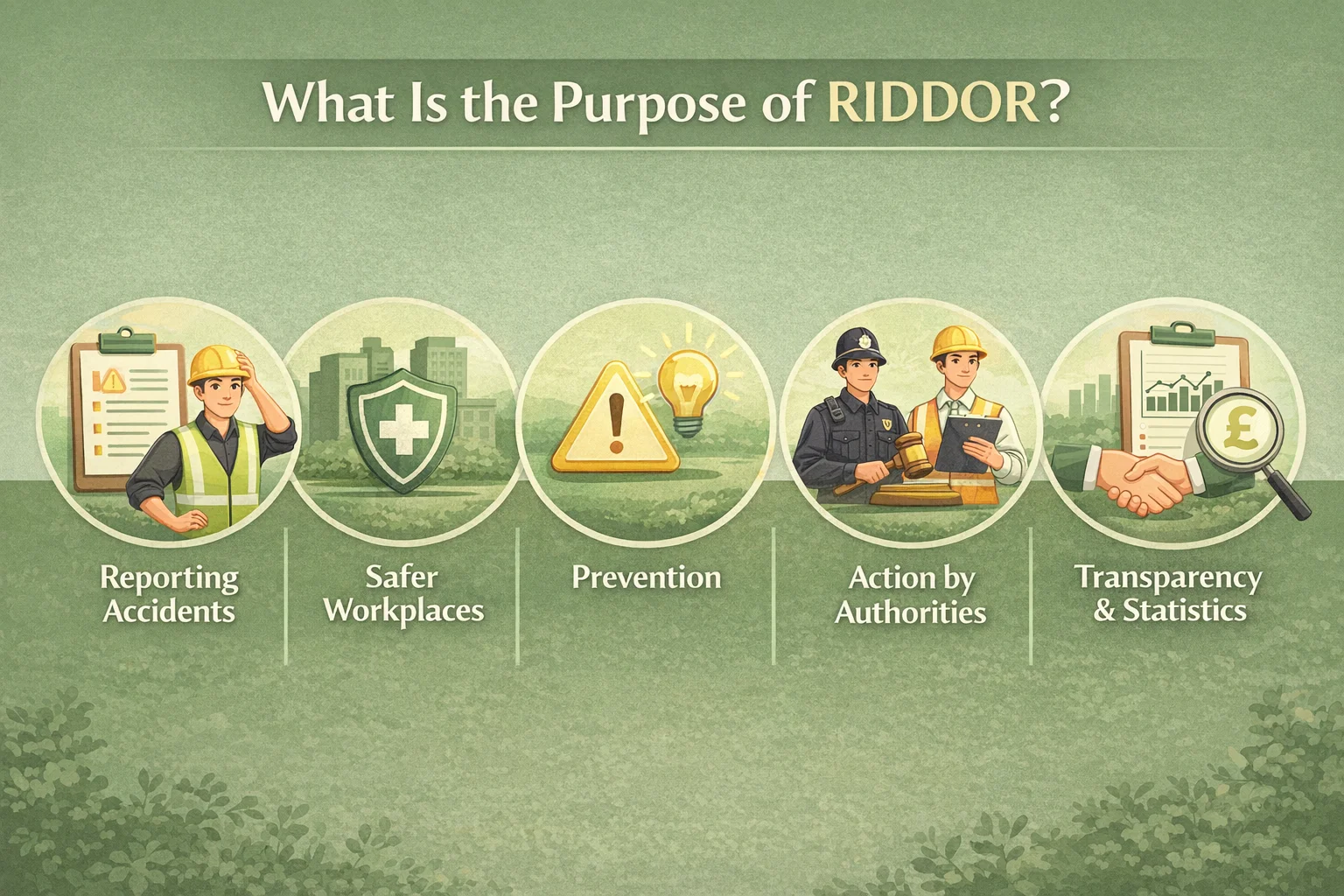
RIDDOR
The and Safety Executive is preparing a major overhaul of RIDDOR, the UK’s workplace injury and dangerous‑occurrence reporting regulations. A public consultation closed on 30 June 2026, and the direction is clear: stricter, broader, and more prescriptive reporting rules, especially for construction.
RIDDOR changes employers must prepare for:
With the consultation now closed, HSE is expected to publish draft final rules soon. Employers should begin reviewing internal reporting systems, training supervisors, and auditing incident‑logging processes.
Summer heat remains a major risk across UK workplaces, especially construction. Rising temperatures have led to increased cases of heat stress, heat exhaustion, and heat stroke, all of which can severely impair concentration and raise accident risk.
Barbour have released an employee fact sheet for working in the sun and heat Employee-Factsheet-Working-in-Sun-and-Heat.pdf
These measures are essential as July heat continues to intensify across UK construction sites.
Recent HSE enforcement updates show a disturbing pattern: falls through fragile roofs, skylights, openings, and unprotected platforms remain among the most prosecuted failures in 2026.
Analysis of 2026 HSE prosecutions shows that machinery entanglement, unsafe isolation, vehicle strikes, and hazardous exposure continue to recur across construction, manufacturing, logistics, and maintenance.
This week is an ideal time for employers to revisit guarding, isolation procedures, and vehicle‑movement controls.
This week’s safety priorities are clear:
Contact us if you would like further information.