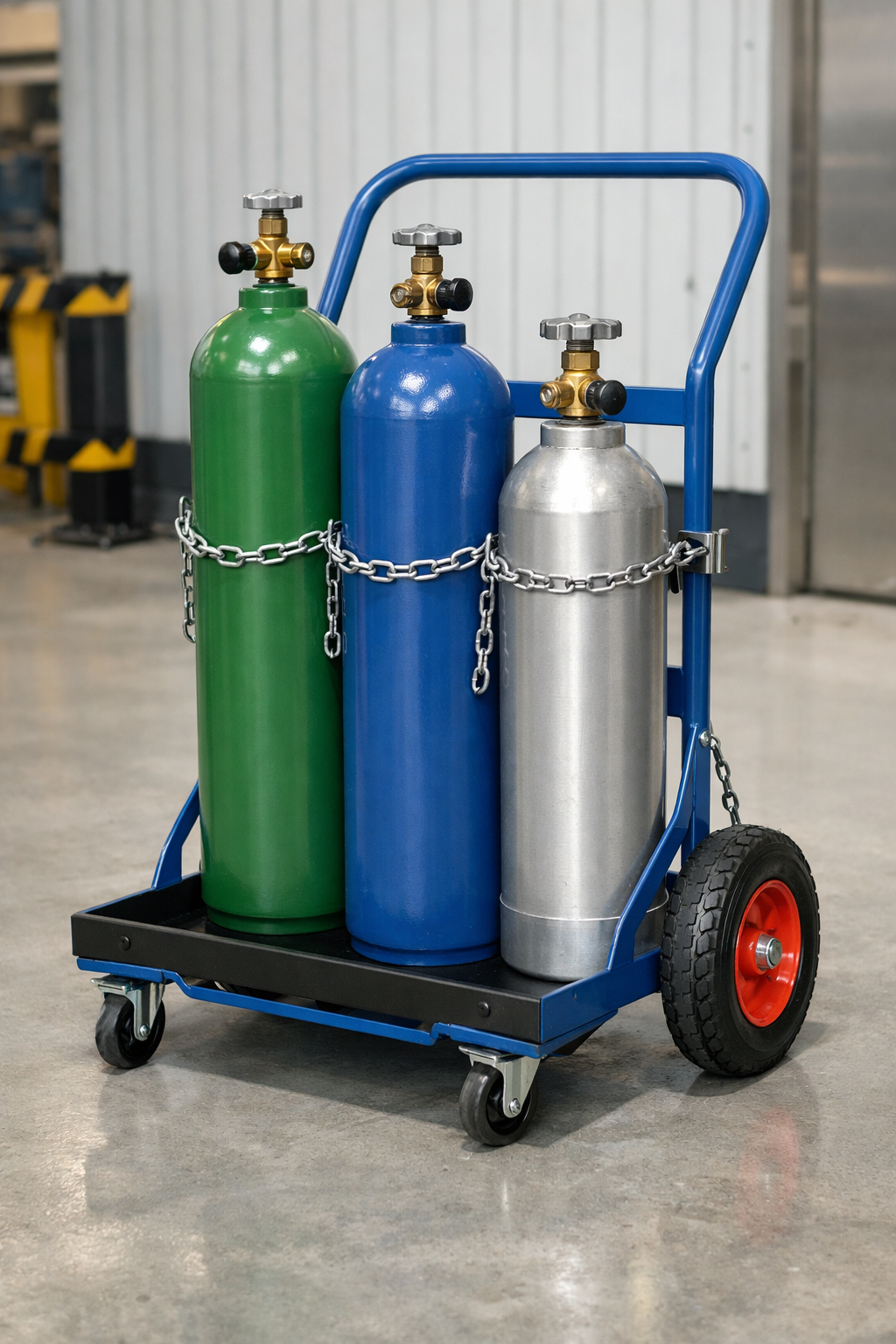
In garages, workshops and factory environments, welding gas cylinders are part of everyday operations — quietly sitting behind benches, beside welding bays or stored in designated gas cages. They’re easy to overlook because they’re familiar. But with updated UK guidance and increased inspection focus, 2026 is the perfect time to take a fresh look at the hoses, regulators and fittings attached to your welding gas cylinders.
Because yes, the expectations have tightened, and yes, replacing ageing accessories is often safer and more compliant than relying on extra checks.
Regulators used for oxygen, acetylene, argon mixes and CO₂ must now meet BS EN ISO 2503, be clearly date‑stamped, and show no signs of corrosion or damage. If your regulator is out of date or unlabelled, it will not pass inspection.
Welding gas hoses must comply with BS EN 559, and inspectors are increasingly favouring flexible stainless hoses (BS EN ISO 10380) in high‑risk or high‑movement areas due to their durability and heat resistance.
Unlike static LPG setups, garages and factories have:
This is why guidance now emphasises proactive replacement rather than “it still works, so we’ll keep it”.
Even with compliant equipment, modern inspections expect:
These checks are no longer optional — they’re part of standard workshop compliance.
While checks help, replacement is often the safer and more compliant choice.
If they’re older than 5 years, cracked, stiff, heat‑damaged or unmarked, they must be replaced.
If they’re older than 10 years, corroded or missing a clear date stamp, they must be replaced.
Jubilee clips are banned. Factory‑crimped ends only — anything else is an automatic fail.
A smart upgrade for high‑movement, high‑heat or high‑risk areas.
In short: if your accessories are ageing, mismatched or outdated, replacing them is easier than trying to justify them during an inspection.
| Component | Standard | Replace? | Reason |
|---|---|---|---|
| Hose | BS EN 559 | Every 5 years | Ageing, cracking, heat exposure, compliance |
| Regulator | BS EN ISO 2503 | Every 10 years | Service life; date stamped; corrosion risk |
| End fittings | Factory‑crimped | Replace if clipped | Jubilee clips banned |
| Stainless hose | BS EN ISO 10380 | Optional | Longer life, heat‑resistant |
| Leak testing | Daily | Not replace | Mandatory routine check |
Welding gas cylinders themselves are robust — it’s the accessories that quietly age, degrade and fall out of compliance. With updated standards now in place, replacing hoses, regulators and fittings isn’t just good practice; it’s the simplest way to stay safe, legal and inspection‑ready across garages, workshops and factory premises.
If you have any questions, please get in touch.