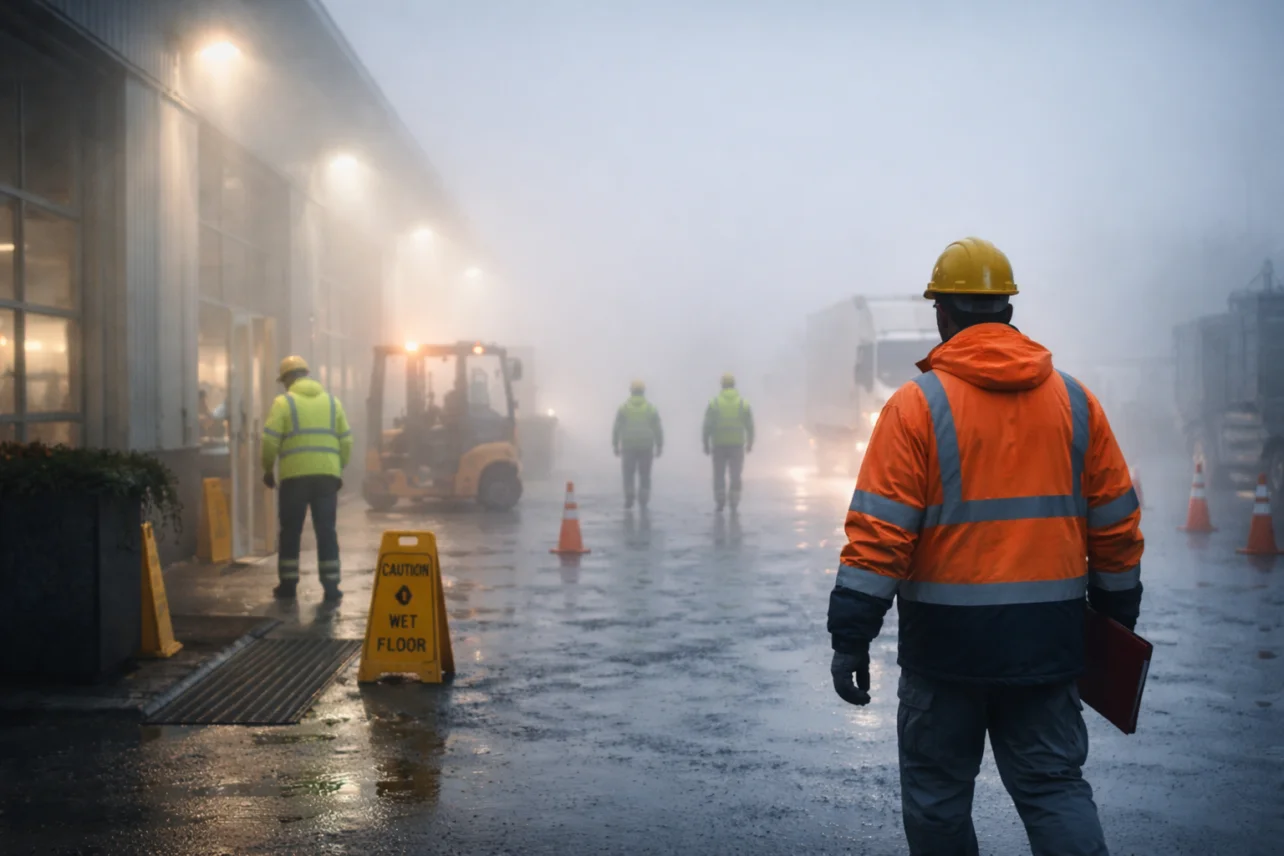
 Recent weather has brought a timely reminder that seasonal weather can have a significant impact on health and safety. With low temperatures, damp conditions and a Yellow Weather Warning for fog affecting parts of the UK, many workers faced challenging conditions both on the roads and in the workplace. Dense fog reduced visibility in some areas to less than 100 metres, creating difficult travelling conditions and increasing the risk of accidents.
While many people think of health and safety in terms of machinery, hazardous substances or construction activities, the weather remains one of the most underestimated workplace hazards. A short commute, a delivery route, a site inspection or even a walk across a car park can quickly become high-risk when visibility is poor and surfaces are wet or icy.
Fog can dramatically reduce a person’s ability to see hazards, judge distances and react to changing conditions. Drivers, pedestrians, cyclists and forklift operators can all be affected.
The recent fog warnings highlighted the potential for:
The combination of fog, rain and shorter daylight hours creates what meteorologists have described as the “perfect recipe” for challenging travel conditions.
Employers should ensure that weather-related risks are assessed and managed appropriately. Some practical measures include:
Where possible, allow additional travel time for employees attending customer sites, construction projects or remote locations. Rushing to make up lost time is often a contributing factor in road traffic collisions.
Outdoor workers should wear suitable high-visibility clothing, particularly when working near moving vehicles, roads or plant equipment.
Rain and cold weather create wet surfaces that can become extremely slippery. Entranceways, walkways and external steps should be regularly inspected and maintained.
Drivers should ensure lights, wipers, tyres and demisting systems are working correctly before setting off. Vehicles travelling in fog should use appropriate lighting and maintain safe following distances.
Weather warnings are issued for a reason. Managers should monitor forecasts and consider whether certain activities need to be postponed or additional controls introduced.
As temperatures continue to fall and winter approaches, weather-related hazards will become increasingly common. Sometimes the biggest risk isn’t the obvious one. It’s the familiar journey, the routine delivery, or the quick walk across a wet car park that catches us out.
Taking a few extra minutes to plan ahead, slow down and remain vigilant can make the difference between a safe working day and an avoidable incident.
With further colder conditions and the potential for frost expected in the coming days, now is an ideal time for organisations to review their winter safety arrangements and ensure employees are prepared for whatever the weather brings.
Stay safe, stay visible, and remember: when the weather changes, your risk assessment should too.
Contact us for further information.
Guest Blogging
If you feel that you could contribute to this blog page, then please feel free to send me a proposal of your guest blogging ideas and we can discuss these further info@walkersafety.co.uk . Please note any proposals must be of benefit to my readers from individuals with knowledge of their subject matter.