 As winter sets in and temperatures drop, cold weather brings real risks for workers both indoors and outdoors. From chilled warehouses to construction sites and delivery routes, being cold isn’t just uncomfortable — it can be unsafe. Th
Why Cold Weather Matters for Health & Safety
Cold weather affects both the body and the workplace. When working in low temperatures, people may experience stiff muscles, reduced manual dexterity, slower reaction times, and, in extreme cases, cold-related illnesses like hypothermia or frostbite. Exposure over time also increases the risk of slips and falls on icy surfaces and diminished concentration — all of which can lead to accidents.
Beyond physical hazards, cold temperatures can reduce productivity and raise the likelihood of errors, especially when workers are forced to rush or cut corners just to keep warm.
What the Law Says
Under UK law, employers must protect the health and safety of workers — and this includes managing temperature risks.
There’s no legal temperature threshold for outdoor work, but employers must still assess risks and take sensible precautions when cold weather could affect safety or health.
Assessing the Risk of Cold Weather
A cold weather risk assessment should form part of your wider health and safety planning. This means organising your workplace and work activities to reduce exposure to cold and considering factors such as:
If your assessment shows that cold may pose a risk, you must put controls in place. These might include providing breaks in heated shelters, adjusting work schedules, or changing how tasks are performed.
Practical Measures to Keep People Safe
Here are key steps that can make a big difference:
❄️ 1. Provide Appropriate Clothing and PPE
Warm, layered clothing helps workers maintain body heat. If tools or machinery must be handled in cold environments, consider insulated gloves and footwear to protect against cold stress.
☕ 2. Facilitate Regular Warm-Up Breaks
Offer access to heated rest areas and warm drinks so workers can recover from exposure. Frequent breaks in warmth help prevent hypothermia and maintain performance.
🧑🤝🧑 3. Plan Activities With Weather in Mind
Timing tasks for warmer parts of the day or rearranging workloads can reduce exposure. If conditions are severe, consider delaying non-urgent work.
🧠 4. Educate Workers on Symptoms
Make sure workers know signs of cold stress, such as persistent shivering, fatigue, confusion or numb extremities, so they can seek help early.
Cold Weather Outside the Workplace
Cold affects more than just work conditions. UK Government guidance encourages individuals and organisations to support vulnerable people — such as older adults or those with health conditions — during prolonged cold spells. This includes awareness of Cold-Health Alerts, preparation plans and communication of health risks to those at risk.
This broader advice, while focused on general health, reinforces the importance of preparedness and risk awareness during adverse cold weather.
Final Thoughts
Cold weather safety isn’t about making work cosy — it’s about protecting health, reducing risk, and ensuring safe, productive operations through the winter months. By understanding your legal obligations, assessing cold hazards, and putting sensible controls in place, employers can look after their teams and create safer, more resilient workplaces.
A proactive approach to cold weather is good for people, performance and compliance — and it sends a strong message that health and safety really does matter.
Guest Blogging
If you feel that you could contribute to this blog then please feel free to send me a proposal of your guest blogging ideas and we can discuss these further info@walkersafety.co.uk . Please note any proposals must be of benefit to our readers from individuals with knowledge of their subject matter.
Contact us if you require further information.

If you work in health, safety, or environmental management, BHSEA (Birmingham Health, Safety & Environment Association) is a fantastic resource for learning, networking, and professional development. We have been members for nearly four years, and it’s been invaluable.
About BHSEA
Founded in 1930, BHSEA is a charity that brings together professionals across industries to share knowledge, best practice, and lessons learned. The group is run by volunteers and supported by a part-time administrator, keeping it grounded in real-world experience.
Meetings & Events
Membership Costs
Why Join?
Try It First
Curious to see if it’s right for you? You can attend your first meeting as a guest and experience the value of BHSEA first hand. Once you meet the people and see the benefits, joining usually feels like a no-brainer!
Past newsletters from the meetings – Click here
Contact us if you would like to attend.
 On Brew Monday, the third Monday in January, Walker Health and Safety Services and The Samaritans reminds everyone to reach out for a cuppa and a catch-up with the people you care about.
Today’s the day. The day you put the kettle on. The day small talk turns into big talk. The day you break open the biscuits and the taboos.
The day you remind everyone how good human connection feels. How easy it is. And what a difference it can make.
Let’s prevent suicide with a cuppa and a catch-up this Brew Monday. Because for many, tomorrow’s too late.
We know there’s no such thing as ‘Blue Monday’ and that feeling low isn’t just something that happens on Mondays or a random day in January. So we say out with the blue and in with the brew!
There’s always time for a cuppa and a catch-up. It doesn’t matter if it’s a Monday morning or Saturday night, or if you’re drinking green tea or black coffee. If you’re sharing a cuppa, talking and listening, you’re doing it right.
Everything you need to have a Brew Monday
How to reach out to someone
Reaching out to someone could help them know that they are valued and someone cares. If you’ve noticed someone has gone quiet in the group chat or you haven’t heard from them in a while, reach out and check in. A simple message can mean a lot to someone who is going through a difficult time.
Just reaching out and asking someone how they are can give them the opportunity to open up about how they’re feeling. Don’t forget to put aside some time to catch up with them properly, maybe over a cuppa.
Once someone starts to share how they’re feeling, it’s important to listen. This could mean not offering advice, not trying to identify what they’re going through with your own experiences and not trying to solve their problems.
Contact us if you would like support, we can point you in the right direction!
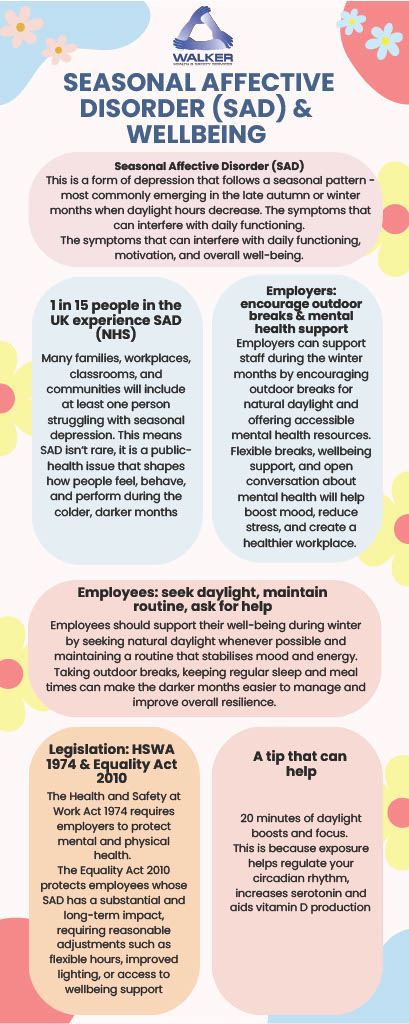
Seasonal affective disorder (SAD) is a type of depression that comes and goes in a seasonal pattern. SAD is sometimes known as “winter depression” because the symptoms are usually more apparent and more severe during the winter.
The specific cause of seasonal affective disorder remains unknown. Some factors that may come into play include: Your biological clock (circadian rhythm). The reduced level of sunlight in fall and winter may cause winter-onset seasonal affective disorder (SAD).
If you’ve been diagnosed with seasonal affective disorder, your treatment plan may include a combination of light therapy, vitamin D supplement, cognitive behaviour therapy and possibly medication. Self-care is key with SAD because it tends to take on a predictable pattern.
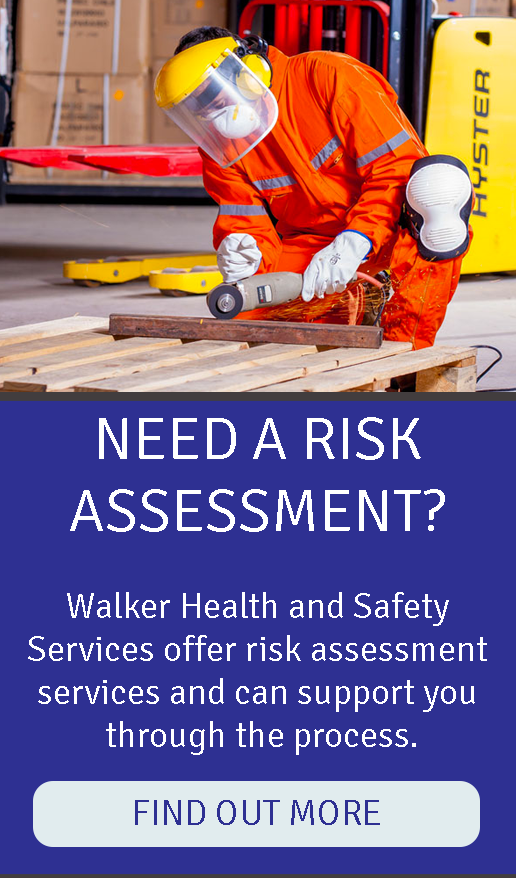
if you would like a risk assessment created for someone, please contact us.
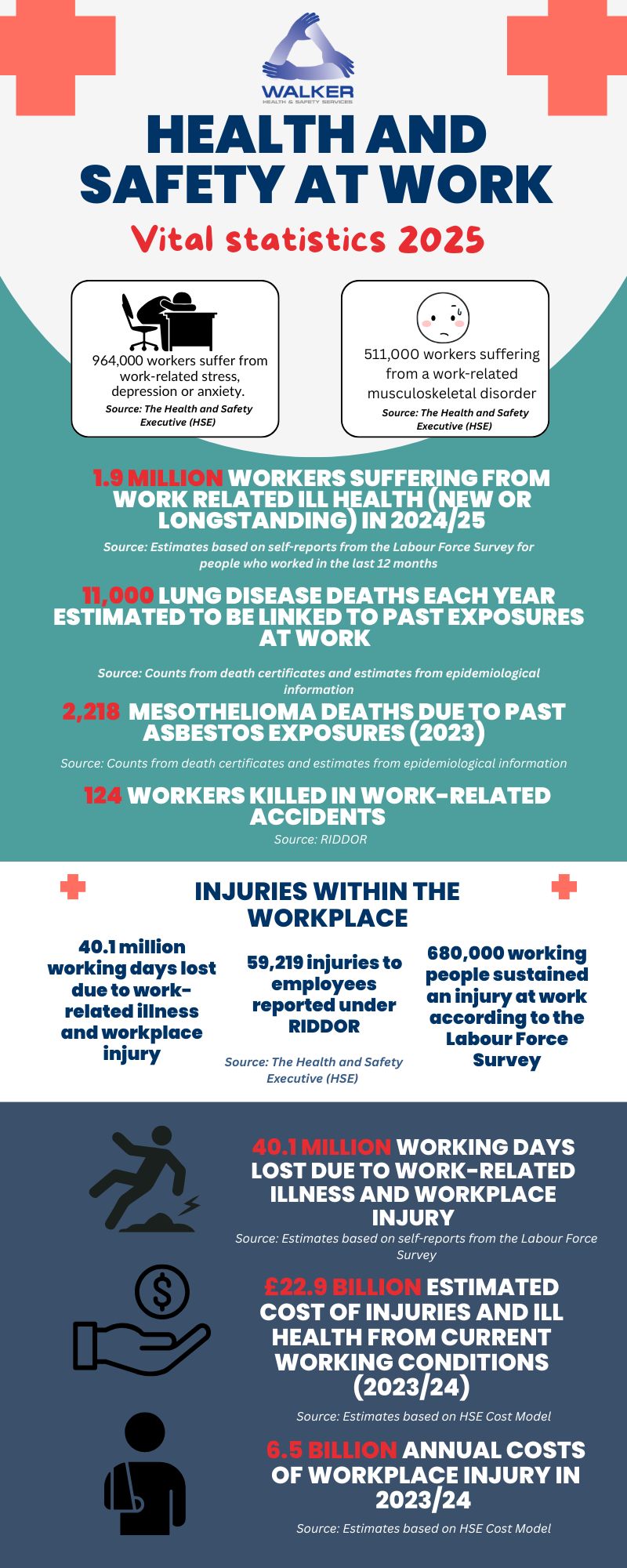
Here at Walker Health and Safety Services Limited, we have researched (from various websites) and identified a number of statistics on workplace injuries and health and safety in Great Britain. Upon reflection, it is evident that the number of injuries remains high, underscoring the importance of prioritising workplace safety. The stats show that when health and safety rules are overlooked, it reveals what can go wrong.
It is essential that workers, employers, and managers all play their part in creating a safe and secure workplace. Following health and safety rules is crucial for protecting employees from harm, ensuring legal compliance, boosting productivity, and enhancing business reputation.
This shouldn’t be seen as a burden as it offers significant benefits – reduced costs, reduced risks, lower absences from employees, and lessened threat of legal action.
Health and safety with the workplace statistics for 2025:
Source: The Health and Safety Executive (HSE)
Source: The Health and Safety Executive (HSE)
Source: Estimates based on self-reports from the Labour Force Survey for people who worked in the last 12 months
Source: Counts from death certificates and estimates from epidemiological information
Source: Counts from death certificates and estimates from epidemiological information
Source: RIDDOR
Source: The Health and Safety Executive (HSE)
Source: The Health and Safety Executive (HSE)
Source: Estimates based on HSE Cost Model
Source: Estimates based on HSE Cost Model
Contact us if you feel you require assistance with your health and safety requirements.