 As winter sets in and temperatures drop, cold weather brings real risks for workers both indoors and outdoors. From chilled warehouses to construction sites and delivery routes, being cold isn’t just uncomfortable — it can be unsafe. Th
Why Cold Weather Matters for Health & Safety
Cold weather affects both the body and the workplace. When working in low temperatures, people may experience stiff muscles, reduced manual dexterity, slower reaction times, and, in extreme cases, cold-related illnesses like hypothermia or frostbite. Exposure over time also increases the risk of slips and falls on icy surfaces and diminished concentration — all of which can lead to accidents.
Beyond physical hazards, cold temperatures can reduce productivity and raise the likelihood of errors, especially when workers are forced to rush or cut corners just to keep warm.
What the Law Says
Under UK law, employers must protect the health and safety of workers — and this includes managing temperature risks.
There’s no legal temperature threshold for outdoor work, but employers must still assess risks and take sensible precautions when cold weather could affect safety or health.
Assessing the Risk of Cold Weather
A cold weather risk assessment should form part of your wider health and safety planning. This means organising your workplace and work activities to reduce exposure to cold and considering factors such as:
If your assessment shows that cold may pose a risk, you must put controls in place. These might include providing breaks in heated shelters, adjusting work schedules, or changing how tasks are performed.
Practical Measures to Keep People Safe
Here are key steps that can make a big difference:
❄️ 1. Provide Appropriate Clothing and PPE
Warm, layered clothing helps workers maintain body heat. If tools or machinery must be handled in cold environments, consider insulated gloves and footwear to protect against cold stress.
☕ 2. Facilitate Regular Warm-Up Breaks
Offer access to heated rest areas and warm drinks so workers can recover from exposure. Frequent breaks in warmth help prevent hypothermia and maintain performance.
🧑🤝🧑 3. Plan Activities With Weather in Mind
Timing tasks for warmer parts of the day or rearranging workloads can reduce exposure. If conditions are severe, consider delaying non-urgent work.
🧠 4. Educate Workers on Symptoms
Make sure workers know signs of cold stress, such as persistent shivering, fatigue, confusion or numb extremities, so they can seek help early.
Cold Weather Outside the Workplace
Cold affects more than just work conditions. UK Government guidance encourages individuals and organisations to support vulnerable people — such as older adults or those with health conditions — during prolonged cold spells. This includes awareness of Cold-Health Alerts, preparation plans and communication of health risks to those at risk.
This broader advice, while focused on general health, reinforces the importance of preparedness and risk awareness during adverse cold weather.
Final Thoughts
Cold weather safety isn’t about making work cosy — it’s about protecting health, reducing risk, and ensuring safe, productive operations through the winter months. By understanding your legal obligations, assessing cold hazards, and putting sensible controls in place, employers can look after their teams and create safer, more resilient workplaces.
A proactive approach to cold weather is good for people, performance and compliance — and it sends a strong message that health and safety really does matter.
Guest Blogging
If you feel that you could contribute to this blog then please feel free to send me a proposal of your guest blogging ideas and we can discuss these further info@walkersafety.co.uk . Please note any proposals must be of benefit to our readers from individuals with knowledge of their subject matter.
Contact us if you require further information.
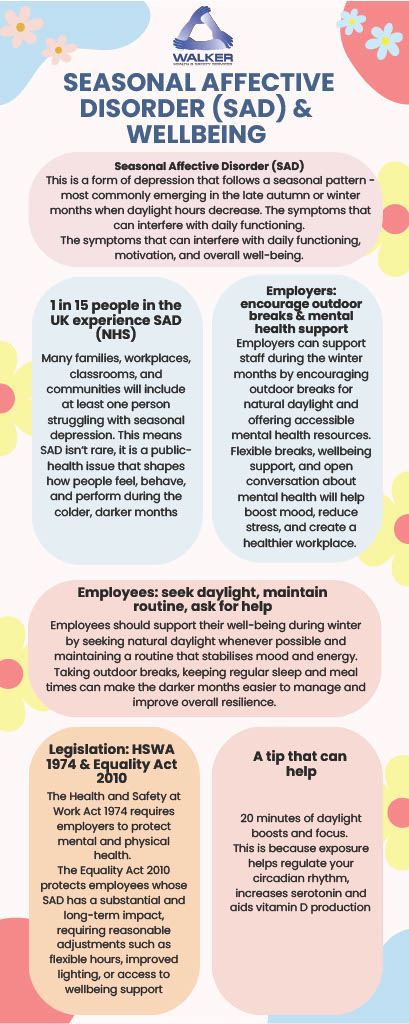
Seasonal affective disorder (SAD) is a type of depression that comes and goes in a seasonal pattern. SAD is sometimes known as “winter depression” because the symptoms are usually more apparent and more severe during the winter.
The specific cause of seasonal affective disorder remains unknown. Some factors that may come into play include: Your biological clock (circadian rhythm). The reduced level of sunlight in fall and winter may cause winter-onset seasonal affective disorder (SAD).
If you’ve been diagnosed with seasonal affective disorder, your treatment plan may include a combination of light therapy, vitamin D supplement, cognitive behaviour therapy and possibly medication. Self-care is key with SAD because it tends to take on a predictable pattern.
if you would like a risk assessment created for someone, please contact us.
December blends festive celebrations with winter extremes, making it one of the most complex months for HSE management. It’s also an opportune moment for inclusion and reflection.
Key Focus Areas and Relevant UK Campaigns:
– Workload & Fatigue Prevention: Encourage balanced hours and check in with teams handling year-end responsibilities.
– Festive Celebrations: Plan social events with safety in mind—consider transport arrangements, manage alcohol responsibly, and ensure inclusivity.
– Winter Hazards: Maintain gritting, safe routes, and emergency measures for outdoor or travelling staff.
2. Inclusion & Wellbeing
– International Day of Persons with Disabilities – 3 December: This UN-led observance encourages awareness of disability issues and inclusive practices (https://awareness-days.co.uk/awareness-day/international-day-of-persons-with-disabilities/2025-12-03/). Use it as a reminder to review workplace accessibility, ensure holiday events are inclusive, and highlight support for staff who may find the festive period isolating or challenging.
3. Environmental Stewardship
– Year-End Energy Management: Promote a “switch-off” initiative for unused equipment and appliances to reduce waste and cost.
– Sustainable Festivities: Avoid single-use plastics, encourage recycling, and choose eco-friendly decor and catering options.
4. Reflection & Planning
December is also the time to review progress against HSE objectives for the year and set fresh goals for the year ahead. Celebrating achievements while identifying areas for improvement ensures momentum carries into January.
This blog positions your business as both caring and professional—balancing safety, culture, and sustainability at a critical time of year.
Contact us for you health and safety requirements.
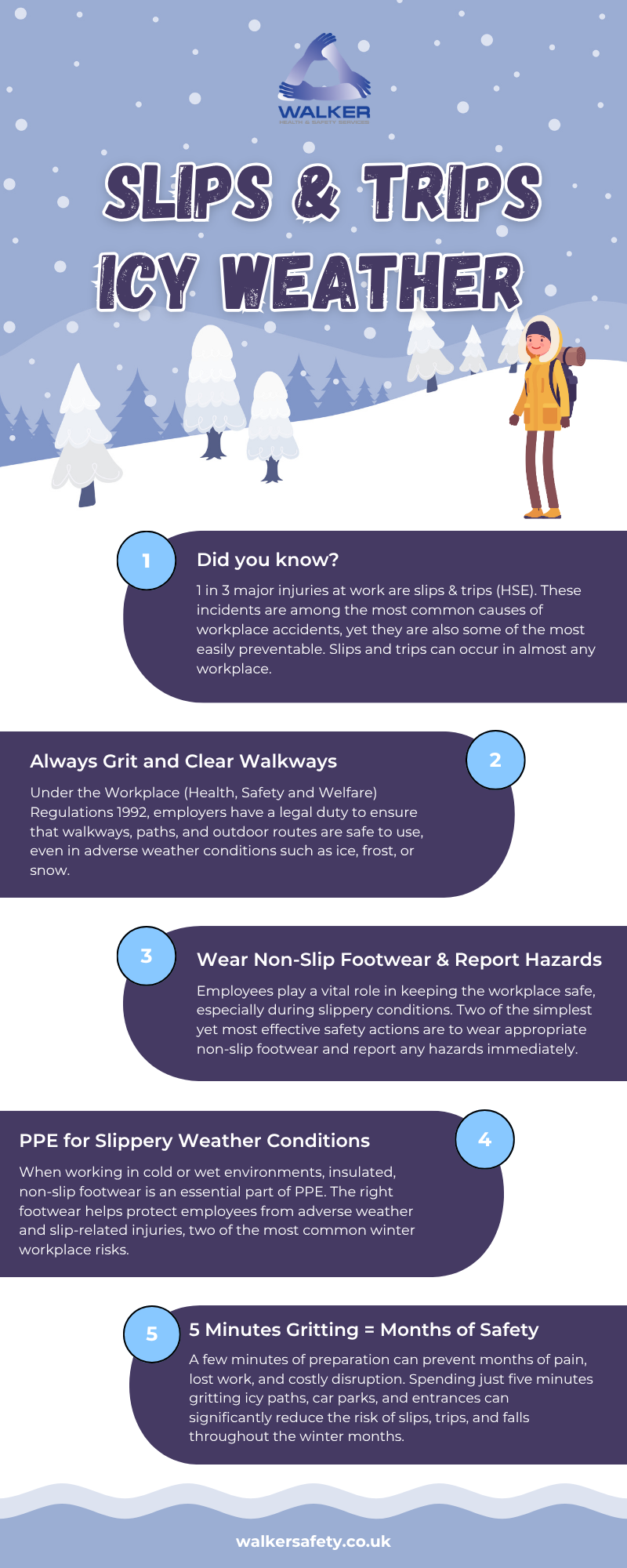
Slips and Trips in Icy Weather: Don’t Let Winter Catch You Off Guard
As temperatures drop and pavements freeze, the risks of slips and trips rises sharply. Icy surfaces are deceptively dangerous—what looks like a harmless patch of frost could send you flying.
Slips and trips in icy weather aren’t just inconvenient—they can lead to serious injury. A few simple precautions can make all the difference.
Contact us if you require further guidance.
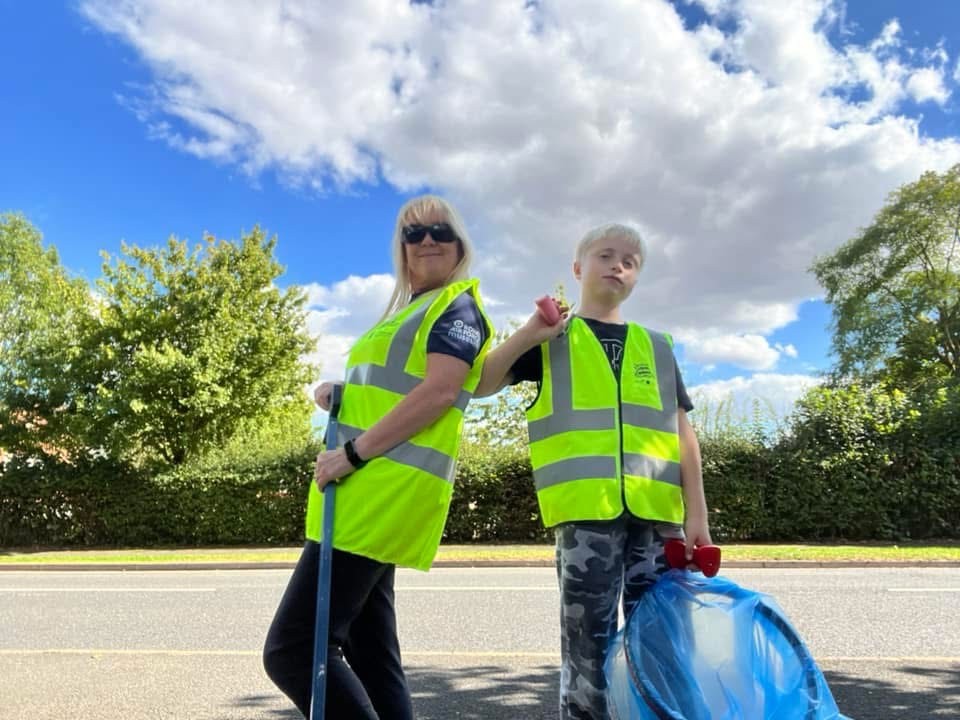 At Walker Health and Safety Services Limited, we believe in giving back to the community we’re proud to call home. Supporting Telford & Wrekin Council’s volunteering schemes—including Street Champions and Snow Wardens—is a fantastic way to make a visible impact, strengthen community bonds, and boost your wellbeing.
But it’s not just for individuals. Businesses, too, can sign up as Street Champions and become local leaders in community pride.
Whether you’re a resident, a family, or a local business, you can become a Street Champion and help keep Telford & Wrekin clean and litter-free.
By signing up, your business or organisation can take ownership of a street, park, or local space and receive equipment and support to organise clean‑ups.
What’s provided:
– Free kit for each volunteer: high‑vis vest, gloves, litter picker, hoop, waste sacks
– Insurance cover while volunteering
– Support from the Council for collecting rubbish after your clean-ups
– Option to take part in wider campaigns like the Great British Spring Clean
Why your business should join:
– Boost your CSR (Corporate Social Responsibility) profile
– Show commitment to your local environment
– Great team-building opportunity
– Gain positive local publicity
– Build relationships with the community
Sign up: Telford & Wrekin Council | Street Champions
Email: pride.officer@telford.gov.uk | Phone: 01952 380455
Snow Wardens are volunteers who help keep public footpaths and pavements safe during icy and snowy weather. This is particularly valuable in helping elderly or vulnerable residents stay safe and mobile.
Your business can encourage team members to sign up individually—or adopt areas near your premises to clear as part of your winter preparedness and community support.
What’s provided:
– High-vis vest, gloves, shovel, rock salt
– Support and updates during adverse weather
– Council insurance while volunteering
Sign up: Telford & Wrekin Council | Snow wardens
Email: snowwardens@telford.gov.uk | Phone: 01952 380455
Volunteering isn’t just about the task—it’s about the people you meet and the sense of pride you gain. Whether you’re picking litter with your team, helping during the snow, or joining a borough-wide event like the Great British Spring Clean, you’ll:
– Meet like-minded people
– Boost morale and well-being
– Make a real difference in your neighbourhood
– Get a bit of exercise and fresh air in the process!
More and more businesses are stepping up to show pride in their communities. Becoming a Street Champion business is a fantastic way to lead by example, engage your team, and contribute to the place you trade, work, and live.
Imagine the benefits:
– Featuring your team’s efforts on your social media and website
– Receiving recognition in community newsletters
– Strengthening your brand’s reputation for environmental and social responsibility
You could even sponsor a regular clean-up, adopt a local green space, or partner with a local school or care home for a joint event.
Whether you’re picking up litter, clearing snow, or just spreading the word, your contribution matters. Businesses have a unique opportunity to lead the way—so why not register today and show your community spirit?
At Walker Health and Safety Services Limited, we’ll be joining in—and we hope to see you out there with us!
Contact us if you would like further information, or want to invite us along.